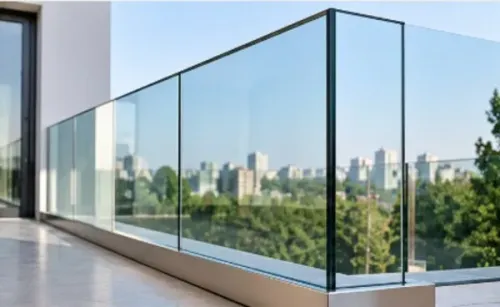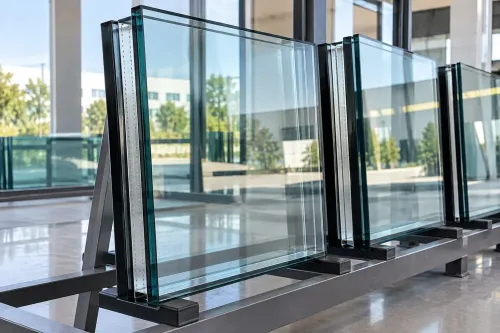
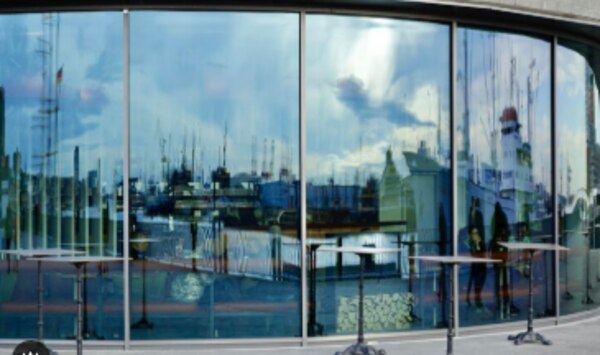
Curved glass is not formed after a sealed insulating unit is complete. Each pane is cut, finished, treated, bent, measured and matched before the spacer and seal system create the DGU. By the end, you will know which drawings, tolerances, glass combinations and inspection records to request before approving a curved unit.
Key takeaways
- Bend each pane before assembling and sealing the DGU cavity.
- Match pane radius, edge alignment and spacer geometry before sealing.
- Confirm that the glass, coating and interlayer are bend-compatible.
- Specify curved DGU when the façade geometry justifies added fabrication complexity.
Where curved glass enters the DGU manufacturing process
Curvature enters the DGU manufacturing process before the insulating cavity is sealed. Manufacturers normally bend each pane separately, then match the two curved panes during assembly; they do not hot-bend a completed sealed DGU.
1. Cut flat glass blanks to the drawing, including the final height, width, holes, cut-outs and edge notches. Complete edge deletion, grinding and any coating removal at the seal line now.
2. Wash the blanks and inspect edges, surfaces and dimensions. Heat-strengthening or toughening must follow this inspection because those processes prevent later cutting, drilling or notching.
3. Apply the specified heat treatment or laminate the pane, then hot-bend it to the required radius, chord and curvature direction. Control the cooling cycle to limit distortion and residual stress.
4. Inspect each cooled pane for radius, edge orientation, dimensions, scratches, inclusions and optical distortion before it reaches the double glazing unit process.
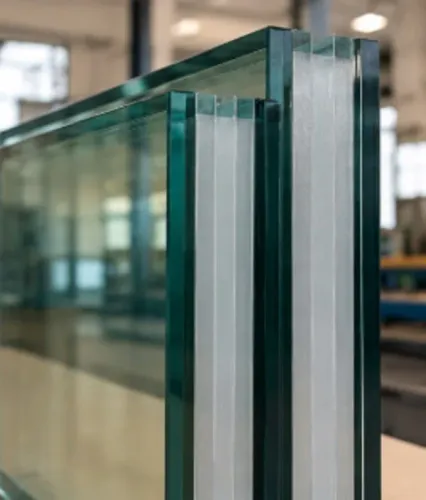
5. Prepare the curved spacer, fill it with desiccant and position it against the first pane. Add the primary seal, place the companion pane, and check cavity width and continuous spacer contact around the curve.
6. Fill the cavity with air or the specified inert gas, then apply the secondary seal. Complete final checks for dimensions, seal continuity, cavity uniformity, condensation and visual quality.
A supplier that claims to bend after primary sealing is describing a different process, not normal curved-DGU production. Confirm the fabrication sequence on the shop drawing before approval.
How manufacturers match two curved panes and build the spacer line
A curved DGU keeps its designed cavity only when both panes share the same radius, curvature direction and spring-back. A radius mismatch or unequal spring-back creates local edge loading, spacer displacement, optical distortion and sealant stress instead of a uniform gap.
The fabrication drawing or template must record:
- Radius, chord, arc length, height, width, curvature direction and edge orientation.
- Crown position, radius tolerance, cavity-width tolerance, pane thickness and the required edge clearance.
Measure both panes against the same template after bending and cooling. A bend glass DGU cannot rely on nominal radius alone: temperature, solar heating and altitude changes can alter sealed-cavity pressure and bow the panes.
Spacer choice determines how well the cavity follows the curve.
| Option | Behaviour | Main risk or use |
|---|---|---|
| Flexible spacer | Follows the bend with fewer joints | Requires controlled compression and continuous seal contact |
| Rigid curved spacer | Holds a precise formed profile | Needs accurate forming; a straight section can bridge the curve and open sealant gaps |
Form curved corners without kinks, and locate joints away from corners where possible. Butt or overlap joints must remain sealed and must not reduce edge clearance. Desiccant inside the spacer absorbs residual moisture; a saturated or poorly filled spacer leaves condensation inside the cavity.
Before shop-drawing approval, request the spacer type, cavity width, sealant system, edge clearance, allowable radius deviation, allowable cavity-width deviation and the first-article template record. Reject drawings that show only a nominal radius.
Which glass and coating combinations can be bent into a DGU
Bending does not make a pane safety glass. Specify the required treatment separately from the fact that the pane is bent: annealed, heat-strengthened, fully tempered, laminated, or a combined make-up. Finalise holes, cut-outs, edge notches and dimensions before heat treatment, because tempered and heat-strengthened glass cannot be cut or drilled afterward.
| Option | What it means for a bend glass DGU | Key limitation |
|---|---|---|
| Annealed | Simplest curved pane and easiest to process | Breaks into large shards; not safety glazing |
| Heat-strengthened | Greater thermal and mechanical resistance than annealed | Breaks into larger pieces than tempered glass; confirm project safety requirements |
| Fully tempered | High resistance and fragmentation into smaller pieces after breakage | Monolithic glass does not retain a sheet after failure |
| Laminated | Interlayer holds fragments together after breakage | Requires compatible bending, interlayer and edge-sealing processes |
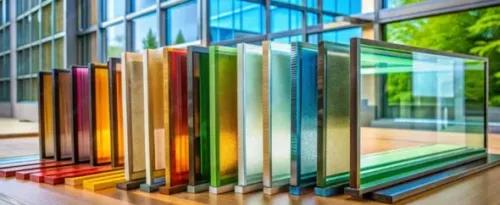
| Tinted | Body colour reduces light and solar transmission | Colour and heat absorption must be included in thermal calculations |
| Reflective | Coated surface controls reflection, glare and solar gain | Coating must be approved for hot bending and heat treatment |
| Low-E-coated | Reduces emissivity and improves thermal performance | Product sequence and bending compatibility require confirmation |
In a two-pane DGU, number surfaces from outside to inside as 1, 2, 3 and 4; identify the coating on surface 2 or 3, not merely as “Low-E.” That orientation changes solar control, U-value, appearance and reflected colour.
Agree the seal-line edge-deletion width with the coating and sealant manufacturers, since unremoved coating can weaken adhesion or suffer chemical attack at the perimeter.
How curved DGU units are sealed, gas-filled and inspected
Agree visual acceptance before manufacture: curvature changes reflections and can make roller-wave, anisotropy and reflected-image distortion more noticeable. Set the viewing distance, lighting condition and acceptance sample before production.
1. In the double glazing unit process, clean and dry each pane edge before sealing. Confirm the agreed coating deletion width at the seal line; coating and sealant manufacturers must approve it. Check for contamination, verify sealant adhesion, and record the specified primary-seal thickness.
2. Assemble the spacer with continuous contact around the curve, including corners and joints. The primary seal blocks moisture and gas ingress; the secondary seal supplies structural support and environmental protection. Gaps, short sealant runs or uneven thickness can cause fogging and gas loss.
3. State the target cavity gas, fill percentage or filling method, and acceptance limits. Tie gas-retention evidence to the production batch or test report, because a visually complete unit can still have incomplete filling or a leaking edge seal.
4. Inspect each curved pane before assembly for radius, edge damage, scratches, inclusions, coating defects and optical distortion. Inspect the completed unit for cavity uniformity, continuous seals, condensation, scratches, inclusions and distortion at the agreed viewing conditions.
5. Check pressure effects in the design review. Temperature changes, solar heating and altitude differences between fabrication and installation alter sealed-cavity pressure, bow the panes and change cavity width; verify the glass thickness, radius, spacer and seal system together.
When a true curved DGU is worth specifying in Chhattisgarh
A flat DGU in a curved frame is cheaper and simpler, but it cannot reproduce a true curved reflection or maintain the same cavity geometry. That is how bend glass is used during DGU manufacturing in Chhattisgarh: each pane is formed to the project radius before spacer assembly, sealing and gas filling.
| Option | Structural and optical result | Cavity, fabrication and installation consequence |
|---|---|---|
| Flat DGU in curved frame | Fits only if the frame accepts segmented or faceted geometry; reflections reveal the flat panes | Standard production is simpler, but visible joints, frame tolerances and perimeter gaps increase |
| True curved DGU | Follows the continuous curve and gives consistent architectural reflection | Radius, thickness, spacer, sealant, cavity pressure and wind calculations must agree; transport and lifting need tighter control |
Specify a true curved unit when the curve is continuous, the façade is viewed obliquely, or the frame cannot hide pane edges. Reject automatic substitution: a flat pane cannot copy curved seal geometry, and a curved unit can fail when pressure, solar heating or altitude changes bow mismatched panes.
Your submittal should state:
- Pane make-up and thickness; radius, chord, cavity and spacer; coating surface and gas specification
- Dimensional tolerances, design wind and thermal calculations, applicable IS or EN product standards, and warranty exclusions
- First-article approval, purpose-made transport racks, lifting method and delivery inspection responsibility
For a DGU supplier in Chhattisgarh, verify in-house bending or named outsourcing, road protection, permitted storage time and documented sealant cure. Jivan Industries belongs on the shortlist only after supplying those project-specific details and approvals.
Related products
 | SAFTEY Keeping full focus on the industry set quality standard, we are persistently offering an affordable spectrum of Toughened Glass to our clients in... View product → |
 | Laminated Glass is a safety and security glass that is made by sandwiching a laminated sheet between two pieces of glass. View product → |
Frequently asked questions
Where does bending occur in the DGU manufacturing process?
Manufacturers bend each glass pane separately before assembling the panes into a sealed double glazing unit. They do not hot-bend a completed sealed DGU.
How are two curved panes matched in a DGU?
The fabricator matches the panes by curvature, radius, orientation and edge alignment, then builds the spacer line to maintain the insulating cavity.
Which glass and coatings can be used in a curved DGU?
The selected glass and coating must be rated for bending and compatible with the intended heat treatment, orientation and sealing system. Confirm compatibility with the glass processor before production.
How are curved DGU units sealed and inspected?
Manufacturers install and seal the spacer, fill the cavity with insulating gas when specified, apply the secondary seal and inspect curvature, edge alignment, seal continuity and visible defects.
When is a true curved DGU worth specifying in Chhattisgarh?
Specify one when the building geometry, sightlines or performance brief requires a continuous curved insulated façade. Use flat segmented units when they achieve the design with less fabrication risk and cost.
Related product
 | A double unit comprises of two panes of glass. These two panes of glass are held apart by a spacer bar. View product → |