
Outside noise reaches a room through more than the glass: open vents, leaking seals, weak frames, wall junctions and vibration paths can all defeat a high-performing pane. By the end, you will be able to compare glazing options, interpret acoustic ratings, set a realistic target and specify the frame and installation details needed to achieve it.
Key takeaways
- Identify airborne or structure-borne noise before choosing glass.
- Use laminated, asymmetric glazing for different noise frequencies.
- Compare Rw, STC, OITC, C, and Ctr values together.
- Specify airtight frames, seals, and tested installation details.
How Outside Noise Gets Through a Window
The first question is whether the disturbance travels through the air or through the building. That distinction determines whether a heavier, damped pane can help, or whether vibration is bypassing the window altogether.
- Airborne noise travels as pressure waves through the atmosphere, reaches the glass and makes it vibrate. Voices, sirens and most aircraft noise follow this path.
- Traffic noise is mainly airborne, but engines, tyres and exhaust produce strong low-frequency content. OITC is more useful than STC for this outdoor source because STC is oriented mainly toward speech and indoor sound.
- Impact noise begins with a collision, such as a rail wheel joint, road excavation or a falling object. The resulting energy can reach you through the air, the ground or both.
- Structure-borne vibration travels through soil, foundations, walls, slabs, mullions and frames. A new acoustic pane will not stop it if the building structure is carrying the vibration around the glass.
This is why a window rated well for speech may disappoint beside a motorway. Perimeter gaps, vents and frame joints also let airborne sound around the pane, while a sealed cavity intended for thermal insulation does not establish a specific acoustic rating.
Identify the dominant path before comparing glazing; otherwise you can pay for better glass and leave the actual transmission route untouched.
Which Glazing Construction Fits the Noise Problem?
Compare the complete tested construction, not the label “double-glazed” or “soundproof glass.” A valid comparison names pane thicknesses, interlayer, cavity width, frame, frequency spectrum and test standard; one dB figure without those details cannot predict site performance.
| Option | What it means | When it fits |
|---|---|---|
| Single glazing | One pane; lowest mass and no cavity | Low noise demands or budget repairs, but weak against traffic and speech |
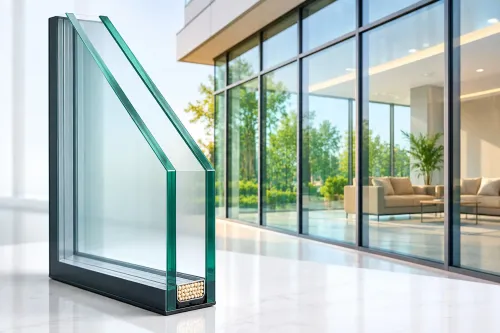
| DGU | Two sealed panes separated by an air or gas cavity | General improvement; use unequal pane thicknesses to separate coincidence frequencies and widen the useful response |
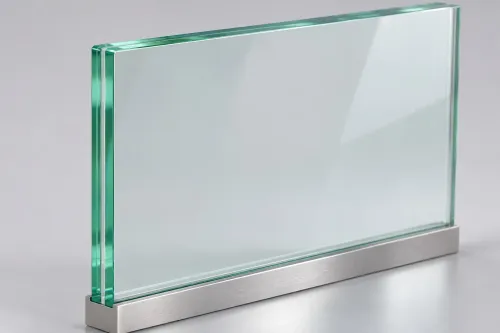
| Laminated glass | Glass bonded with ordinary PVB, adding damping and retained fragments | Noise reduction plus safety retention; not automatically better than every DGU |
| Acoustic laminated glass | Laminated glass with a purpose-designed acoustic PVB interlayer | Critical road, rail or aircraft bands where damping matters; compare its tested spectrum with ordinary PVB |
| Secondary glazing | A separate inner window creating a deep air space from the existing pane | Retrofit projects, especially where the existing frame stays; sealing and the gap dimension control the result |
A DGU can lose at a mass-air-mass resonance, while laminated glass can perform better in that frequency band. Wider cavities help only when the whole unit is engineered and sealed.
Keep sound and safety as separate schedule items. Tempered glass offers breakage safety but not laminated glass’s retained-fragment barrier; hazardous locations need the required impact classification, such as ANSI Z97.1 or CPSC 16 CFR Part 1201.
How to Read Rw, STC, OITC, C and Ctr Ratings
A bedroom beside a quiet street and a bedroom beside a bus route need different evidence. Rw is the ISO 717-1 weighted sound-reduction index; STC is the ASTM E413 speech-oriented rating. Neither is a property of glass alone: the tested frame, seals, spacer, sash and installation form part of the specimen.
Use the rating that matches the noise spectrum and treat these targets as starting points, not guarantees:
| Situation | Useful measure | Initial target | What to check |
|---|---|---|---|
| Bedroom, ordinary airborne noise | Rw or STC | Rw 40–45 or STC 40–45 | Confirm bedroom night-time background goals |
| Roadside or rail-facing home | OITC | OITC 45–50 | OITC weights low-frequency engines, buses and trains |
| Meeting room | STC or Rw | STC 40–45 or Rw 40–45 | Higher ratings improve speech privacy |
| Recording or critical listening room | Rw, OITC and spectrum data | 50+ | Have an acoustician match the façade to measured noise |
| Open-plan office | STC or Rw | 35–40 | Glazing alone cannot control speech across the room |
OITC, defined by ASTM E1332, is usually more useful than STC outdoors. The C correction term represents common mid- and high-frequency noise; Ctr applies a stronger low-frequency correction for traffic. A result written Rw 45 (C; Ctr) reveals more than “45 dB,” but ask for the frequency-band data and the complete tested construction.
Ensure acoustic targets and safety classifications, such as ANSI Z97.1 or CPSC 16 CFR Part 1201, appear as separate requirements.
Why the Frame and Installation Can Defeat Acoustic Glass
An acoustic pane cannot compensate for an air path around its edge. The tested rating belongs to the complete specimen: glass, sash, frame, seals, spacer, glazing method and wall interface. Replace that assembly with a different frame or installation, and the site result can fall sharply.
| Weak point | What fails on site | Required coordination |
|---|---|---|
| Operable sash | Poor locking pressure, misalignment or worn compression seals leave a continuous leak | Set frame tolerances, adjust locking points and maintain compression seals |
| Glass perimeter | An interrupted bead or cracked joint bypasses the pane | Specify continuous perimeter sealant, backer details and compatible glazing gaskets |
| Mullions and transoms | Joints and pressure-plate interfaces transmit sound between units | Seal stack joints and align gaskets across every mullion and transom |
| Opening vents | Trickle vents and transfer grilles create a direct path outdoors | Use acoustically rated vents, or relocate mechanical air supply and return |
| Façade interfaces | Wall, spandrel, door, roof and service penetrations flank the window | Seal the frame-to-wall junction and coordinate fire, thermal and acoustic penetrations |
Check drainage paths without leaving an open route through the frame. A sealed window can still underperform if an opening vent, door or façade joint has lower isolation than the glass.
Ask for the tested construction, frequency spectrum and standard, not “soundproof glass” plus one dB figure. ASTM E90 describes laboratory transmission loss; ASTM E336 checks field airborne sound insulation, where leakage and flanking become visible.
What to Put in a Sound-Reduction Glazing Specification
A proposal that says “acoustic glass, 40 dB” is not comparable. Request the complete tested construction: pane thicknesses, unequal or equal panes, cavity width, interlayer type, frame, frequency spectrum and laboratory method.
Use the schedule to separate these decisions:
- Acoustic: state the target OITC for road, rail or aircraft noise, or STC for indoor airborne noise. Require the test report to identify ASTM E90 and the exact assembly; thickness alone does not predict performance across every frequency.
- Safety: specify laminated or tempered glass, location, and breakage requirement separately. Ask for ANSI Z97.1 classification where applicable; tempered glass is not a substitute for laminated retained-fragment protection.
- Thermal: request U-factor, solar heat gain coefficient and condensation requirements. A sealed cavity improves thermal performance but does not establish an acoustic rating.
- Installation: name the frame, gaskets, perimeter sealant, mullion joints, vents and adjacent wall construction. Require site sealing details and, where performance matters, ASTM E336 field testing.
| Schedule item | What to compare | What to reject |
|---|---|---|
| Acoustic rating | OITC or STC, spectrum, ASTM E90 report | A single dB figure |
| Safety | ANSI Z97.1 class and glass type | “Safety glass” without classification |
| Site performance | ASTM E336 result or test plan | Laboratory rating presented as field performance |
| Thermal | U-factor and solar heat gain coefficient | “Double glazing” as the only claim |
Jivan Industries can be asked to quote the specified DGU or laminated build-up against this schedule, rather than substituting an unnamed “soundproof” product.
Related products
 | A double unit comprises of two panes of glass. These two panes of glass are held apart by a spacer bar. View product → |
 | Laminated Glass is a safety and security glass that is made by sandwiching a laminated sheet between two pieces of glass. View product → |
Frequently asked questions
How does outside noise get through a window?
Noise reaches a room through airborne transmission across the glass and frame, or through vibration travelling through the building structure.
Which glazing construction best fits a noise problem?
Choose glazing based on the noise frequency: laminated glass helps damp vibration, while thicker and asymmetric panes improve performance across different frequencies.
What do Rw, STC, OITC, C, and Ctr mean?
Rw and STC are weighted sound-reduction ratings, OITC focuses on outdoor traffic noise, and C and Ctr adjust results for common and low-frequency sources.
Why can the frame and installation defeat acoustic glass?
Air gaps, weak seals, poorly fitted frames, and openings around the window create sound paths that bypass the acoustic glass.
What belongs in a sound-reduction glazing specification?
State the glass build-up, acoustic rating and test standard, frame type, seals, installation method, airtightness requirements, and treatment of joints and vents.