Windows influence heat flow, solar gain, daylight, condensation and the size of the heating or cooling system. By the end, you will be able to compare insulated glass options, choose performance targets for your climate and identify the frame, spacer and installation details that determine whether the rated efficiency reaches the occupied building.
Key takeaways
- Specify low-emissivity coatings, cavity width and gas retention together.
- Match U-value, SHGC and VLT to the building’s climate and orientation.
- Check frames, spacers and installation because they can undermine glass performance.
- Compare double, triple and solar-control glazing by comfort, loads and cost.
How the Sealed Cavity Reduces Heat Transfer
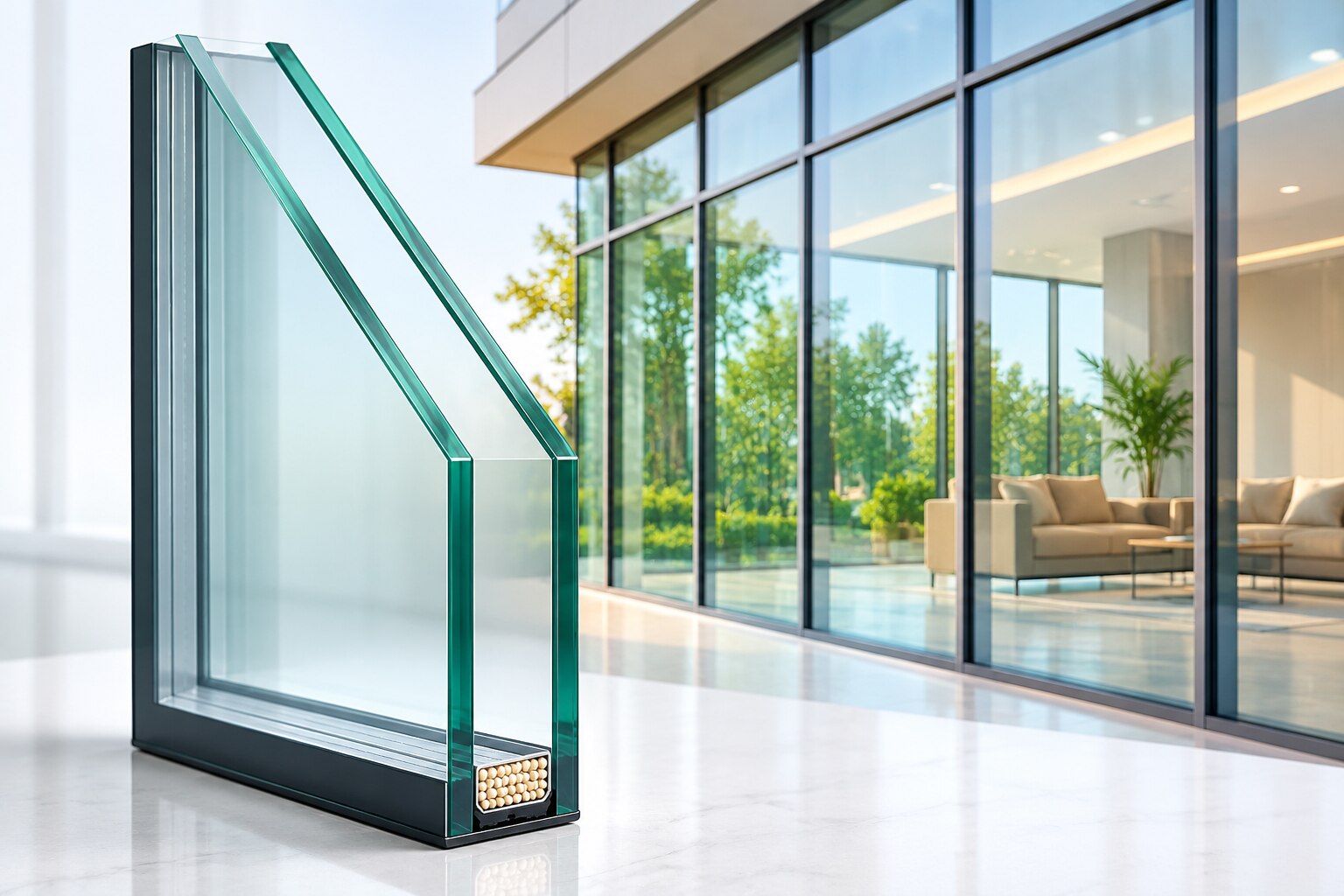
An insulated glass unit reduces heat moving through a window by placing two or more panes around a sealed gas space. The gap interrupts direct heat flow, but the cavity alone does not create a high-performance IGU; pane coatings, cavity width, gas retention and edge construction also determine the result.
- Conduction carries heat through the glass and spacer. Separating the panes increases the distance heat must cross.
- Convection through the sealed cavity’s gas space moves heat as warmer gas rises and cooler gas falls. A correctly sized gap limits this circulation.
- Radiation crosses the cavity without moving air. Low-emissivity, or Low-E, coatings reflect much of this infrared energy back toward its source.
Air is a practical fill, while argon usually lowers heat transfer because it conducts less heat. Krypton works well in narrower cavities, but either gas loses its advantage when the edge seal leaks and the concentration declines.
The edge seal keeps the gas inside and supports the spacer. A warm-edge spacer reduces heat flow around the perimeter, where a conductive metal spacer can create a cold interior edge. That cold edge can increase condensation risk even when the centre of the glass performs well.
Which U-Value, SHGC and VLT Combination Fits the Climate?
Choose the combination that matches your heating, cooling and daylight priorities, not the lowest U-value alone. U-value, also called U-factor, measures heat flow through the unit; a lower figure improves insulation. SHGC, meaning g-value, is the solar heat gain coefficient: a lower figure blocks more sun, while a higher figure admits more useful solar heat.
| Climate or exposure | U-value / U-factor | SHGC meaning g-value | VLT visible light transmittance |
|---|---|---|---|
| Heating-dominated | Low | Medium to high on sun-facing glass | Medium to high |
| Cooling-dominated | Low | Low | Medium, with high VLT if daylight is important |
| Mixed or variable | Low to moderate | Medium, adjusted by orientation | Medium to high |
Use a higher SHGC where winter solar gains reduce heating demand and overheating is controllable with shading. Select low SHGC on strongly sun-exposed glass in cooling-dominated spaces, where unwanted solar gain increases air-conditioning loads.
VLT visible light transmittance is not the same as SHGC. A dark tinted pane can block sunlight but also make rooms dependent on electric lighting; spectrally selective low-e glass can reduce near-infrared heat while preserving more visible light.
Compare the figures for the complete insulated glass unit, not the coating alone, and check each orientation separately. A very low U-factor is a poor trade if it sharply reduces daylight or blocks beneficial winter sun.
How Glass Selection Changes Loads, Comfort and Condensation
An insulated glass unit can lower both heating load and cooling load, but the best balance depends on climate, orientation and solar-control strategy. Lower heat flow through the unit reduces winter heat loss; a low-SHGC, spectrally selective low-e coating limits summer solar gain while preserving more daylight than heavily tinted glass.
In a heating-dominated building, very low SHGC can discard useful winter sun.
Warmer inner panes improve occupant comfort by reducing radiant chill and downdrafts near windows. A warm-edge spacer raises the temperature at the glass perimeter, where a conductive metal spacer creates a cold strip.
Exterior condensation on the outside pane can signal effective insulation: the outer surface has cooled below the outdoor-air dew point because less indoor heat reaches it.
An IGU does not eliminate interior condensation. Check these conditions together:
- The indoor relative humidity is high for the outdoor temperature.
- The interior glass or frame surface falls below the indoor dew point.
- A conductive spacer creates a cold perimeter.
- Air leakage carries moist indoor air to a cold edge or gap.
- Large glazing areas expose more perimeter to cold conditions.
Why the Frame and Installation Can Override the Glass Rating
A high-performing IGU can deliver a weak installed result if the frame or its interfaces conduct heat or leak air. Compare the whole-product NFRC U-factor, not the center-of-glass value: the rating includes the glass, edge region, spacer and frame.
| Assembly part | What controls performance | What goes wrong |
|---|---|---|
| Window frame material | Aluminium, uPVC, timber or composite construction; a continuous thermal break in metal frames | A conductive frame creates a cold perimeter and raises heat loss |
| Warm-edge spacer | Low-conductivity spacer at the glass edge, with a durable edge seal | A metal spacer forms a thermal bridge and increases interior condensation risk |
| Edge seal | Continuous primary and secondary seals that retain the gas cavity | Seal failure allows gas loss and moisture between panes |
| Air leakage | Compression gaskets, operable-sash seals and a continuous interior air seal | Moving air bypasses the IGU and makes the rated U-factor irrelevant |
| Perimeter installation joint | Insulation, backer materials, sealant and continuity between frame, sill, air barrier and water-resistive barrier | Gaps create thermal bridges, drafts and water entry |
Specify the complete assembly, including frame, thermal break, warm-edge spacer, gas fill, coating and installation details. A nominal “double-glazed, argon-filled” unit does not identify cavity width or sealing quality.
The perimeter installation joint must connect to the wall’s insulation and air barrier; otherwise, leakage can lower comfort and produce condensation even when the glass rating is strong. Safety glass addresses impact or human safety, not thermal performance.
How to Compare Double, Triple and Solar-Controlled Glazing
Choose double glazing when you need a strong improvement over single glazing without the weight, thickness and frame changes of triple glazing. Compare the complete assembly using an NFRC whole-window rating, not the centre-of-glass value; the rating includes the frame, spacer and edge zone.
| Option | Main advantage | Choose it when | Main trade-off |
|---|---|---|---|
| Double glazing | Balanced insulation, cost and daylight | The climate is mixed, or heating and cooling loads are moderate | Higher U-factor than triple glazing |
| Triple glazing | Lower U-factor and warmer interior glass | Winter comfort, heating demand or a strict envelope target justifies added mass | Thicker, heavier and costlier; it can reduce VLT and solar gain |
| Secondary glazing | Adds an internal air space to an existing window | You must retain historic frames or avoid exterior replacement | More difficult cleaning, operation and airtightness control |
| External shading | Stops sunlight before it reaches the glass | Cooling loads are high, especially on east, west and south façades | Needs structural support, weathering and control planning |
| Specialized solar-control glass | Lowers SHGC while preserving useful daylight | Cooling-dominated buildings need glass-based solar control | Low SHGC can waste useful winter sun; dark tints can reduce VLT |
Spectrally selective glass filters much of the near-infrared energy while transmitting more visible light than a strongly tinted product. That makes solar-control glass preferable when you need a bright interior without excessive cooling gain.
Ask Jivan Industries to compare the specified glass, spacer and frame as one NFRC-rated window, rather than quoting a centre-of-glass U-factor alone.
Related product
 | A double unit comprises of two panes of glass. These two panes of glass are held apart by a spacer bar. View product → |
Frequently asked questions
How does an insulated glass cavity reduce heat transfer?
The sealed space interrupts direct heat flow between panes. Performance also depends on cavity width, gas fill, coatings, seals and edge construction.
How should you choose U-value, SHGC and VLT for a climate?
Use U-value to assess heat flow, SHGC to control solar heat gain and VLT to manage daylight. Select the combination based on climate, orientation and cooling or heating loads.
How does glass selection affect building loads, comfort and condensation?
Glass changes heating and cooling demand, interior surface temperature, glare and occupant comfort. Warmer interior surfaces reduce condensation risk when indoor humidity is controlled.
Can frames and installation override an insulated glass unit’s rating?
Yes. Conductive frames, thermal bridges, failed seals, poor drainage and installation gaps can reduce whole-window performance below the centre-of-glass rating.
How do double, triple and solar-controlled glazing compare?
Double glazing offers lower weight and simpler installation, triple glazing improves insulation, and solar-control coatings reduce unwanted heat and glare. Compare their whole-window performance and project loads.