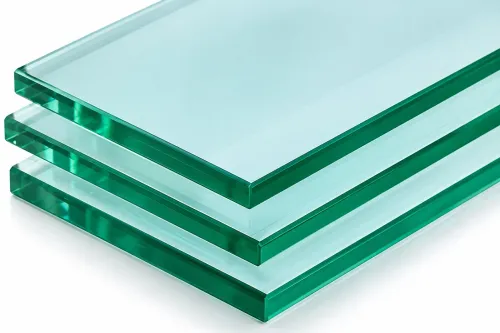
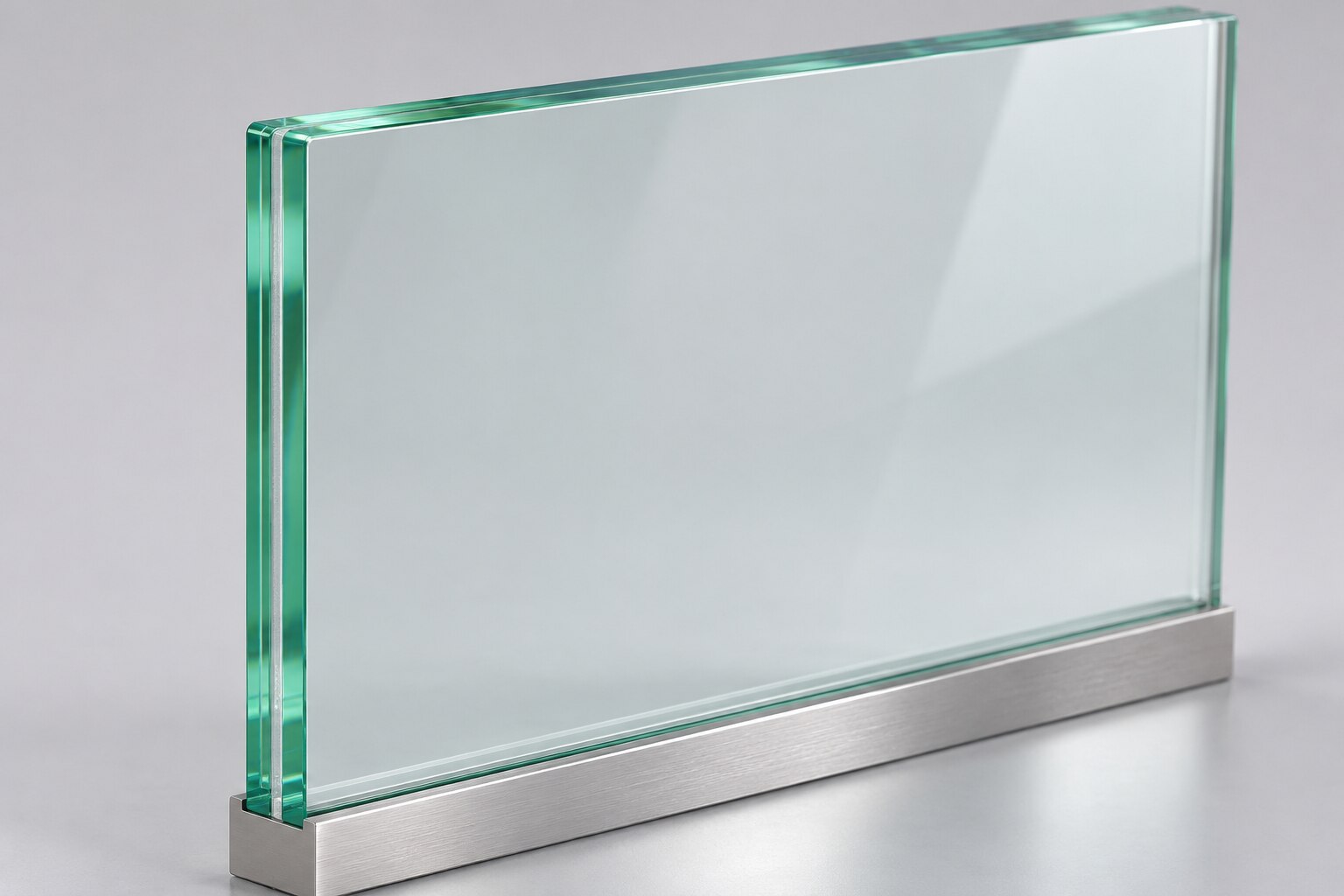
A laminated pane can crack under impact yet remain attached, reducing the chance of an immediate opening or falling shards. That benefit is different from stopping an attacker, bullet, blast, or repeated blows; by the end, you will know how to compare glass types, select a tested build-up, and verify that the frame can support the claimed performance.
Key takeaways
- Expect cracking; the interlayer holds fragments together after impact.
- Do not confuse shard retention with resistance to penetration.
- Match glass thickness and interlayer to the opening and threat.
- Inspect the frame, test evidence, and damage before approving replacement.
What happens when laminated glass takes an impact?
Laminated glass usually cracks at the impact point, but its interlayer holds many shards together instead of allowing the pane to collapse immediately. That fragment retention reduces falling-glass risk; it does not make the opening unbreakable or guarantee resistance to repeated blows.
| Glass type | Breakage pattern | What remains after impact |
|---|---|---|
| Laminated glass | Cracks spread through one or more lites | Shards usually stay bonded to the interlayer, though the pane can lose most of its stiffness and weather-tightness |
| Monolithic annealed glass | Large, sharp fragments form and the crack can run across the sheet | Pieces can fall from the frame; a monolithic annealed glass comparison shows poor fragment retention |
| Toughened glass | The lite breaks into many small, relatively blunt granules | The opening can become almost completely empty, so the frame must retain the broken pieces and replacement is usually immediate |
Laminated glass therefore offers a different kind of impact resistance from toughened glass: it prioritises holding the broken pane together rather than preventing fracture. A retained sheet can still allow penetration after repeated strikes, and it may not be safe for continued occupancy in an overhead or sloped installation.
The interlayer changes the result. Standard PVB provides common fragment retention, while a stiffer structural ionoplast can improve post-breakage support and resistance to deflection in specified designs. The tested glass build-up, frame bite and anchorage still control whether the damaged pane stays in place.
Retention is not the same as resistance to penetration
A pane that stays in its frame after breaking has retention; it has penetration resistance only when test evidence shows it can withstand the specified attack.
EN 356 measures attack resistance, not general impact safety. Its P1A–P5A classes use repeated steel-ball impacts, while P6B–P8B classes use manual-attack tools and increasing impact counts. A P-classification is not proof of forced-entry or bullet performance.
Ask for evidence that matches the threat:
- An EN 356 class for resistance to manual attack, when the concern is an intruder creating an opening with tools.
- An EN 1627–1630 forced-entry classification for the complete installed element, including frame, glazing, hardware and fixings.
- EN 1063 bullet resistance evidence, such as BR1–BR7 or an SG designation, for the tested bullet or shotgun threat.
A high-security laminate can still fail through shallow frame bite, weak glazing beads, exposed fasteners or inadequate anchorage. The glass certificate cannot correct those installation weaknesses.
Check that the test report names the exact glass build-up, interlayer, thickness, frame and attack condition. EN 1063 bullet resistance does not transfer automatically to another laminate or framing system. A broken laminate can remain closed while repeated blows enlarge a hole, separate the interlayer or pull the glass from its edge support.
Specify the required attack class and test duration; “shatterproof” describes neither forced-entry performance nor ballistic protection.
How to choose the glass build-up for the opening
A thicker single pane does not automatically provide better security. Choose the glass thickness, number of plies, and interlayer from the threat, opening size, support condition, wind or impact load, and required post-breakage behavior. Use the specified tested build-up or an engineer-approved equivalent; changing one lite can alter weight, deflection, crack propagation, and frame demand.
| Requirement | Suitable build-up logic | What to verify |
|---|---|---|
| Fragment retention in doors or partitions | Two glass plies with a PVB interlayer | The interlayer remains bonded after the specified impact and the frame retains the panel |
| Forced-entry resistance | Multi-ply laminated glass with increased glass thickness and a tested PVB interlayer or ionoplast interlayer | The complete window or door passes the required forced-entry test, not just a glass sample |
| Overhead, sloped, large-area, or high-wind glazing | Multi-ply laminated glass using an ionoplast interlayer for greater stiffness and post-breakage load retention | Residual-load capacity, glass bite, edge sealing, drainage, and temporary occupancy controls |
| Blast exposure | A tested glass build-up with the specified ply count and interlayer | ASTM F1642/F1642M results plus frame, anchorage, and wall-connection design |
A PVB interlayer suits many architectural safety applications, while an ionoplast interlayer earns consideration when stiffness and retained capacity matter more than fabrication simplicity. Ionoplast is not a universal PVB replacement: fabrication tolerances and edge-sealing control are stricter.
When asking Jivan Industries for a build-up, provide the opening dimensions, frame type, exposure, threat, design loads, and required test standard rather than requesting “thick laminated glass.”
Related product
 | Laminated Glass is a safety and security glass that is made by sandwiching a laminated sheet between two pieces of glass. View product → |
The frame and test evidence control real-world performance
Verify the complete installed system against a test report for the same frame, glazing, hardware, dimensions, and fixing method—not against a glass data sheet. The EN 1627, EN 1628, and EN 1629 test standards assess the assembled element for resistance classification, static loading, and dynamic impact; EN 1630 covers the manual attack test.
Before accepting a security claim, match these details:
- The required resistance class and attack duration
- Glass thickness, number of plies, interlayer type, and pane size
- Frame material, profile, glazing bite, beads, gaskets, and corner joints
- Locks, hinges, handles, fasteners, and whether they remain protected
- Anchorage spacing, substrate, perimeter seals, and the tested installation method
- Any tested restrictions on opening size, mullions, transoms, or deflection
A stronger laminate cannot rescue a shallow frame bite or screws that an attacker can reach. After breakage, repeated blows can enlarge the opening, delaminate the interlayer, or pull the pane from its support even when the glass remains visibly attached.
For blast-resistant glazing, ask whether the test covered the façade or only a specimen. ASTM F1642/F1642M evaluates glazing response to airblast, but passing that test does not qualify an entire curtain wall. Confirm the frame, anchorage, window-to-wall connection, and surrounding construction were included in the stated design evidence.
What to do after cracking, delamination, or severe impact
A cracked laminate can remain temporarily in place only when fragments are retained, the frame and beads are undamaged, no opening or loose edge exists, and a qualified glazing inspector confirms that temporary retention is safe. “Held together” describes post-breakage safety, not safe continued occupancy.
Arrange an inspection after any severe impact, even if the pane looks intact. Ask the inspector to check the glass, interlayer bond, bite, setting blocks, beads, fasteners, seals and adjacent frame; repeated blows can enlarge a hole or pull the laminate from its support.
- Close off the area immediately if glass is loose, projecting, sagging, displaced in the frame, or shedding fragments.
- Require temporary boarding when the break leaves an opening, security boundary, weather seal or fall hazard exposed. Do not use boarding as a substitute for repairing a damaged overhead or sloped pane.
- Treat edge delamination as a replacement trigger when it reaches the supported edge, exposes the interlayer or allows water into the laminate.
- Record interlayer clouding and moisture, then replace the pane when visibility, bonding or weather-tightness is affected.
- Replace the unit after penetration, a hole, frame damage, failed retention or an impact that leaves the remaining pane unstable.
For overhead, sloped, large-area or high-security glazing, obtain a documented engineering assessment before reopening the space. The decision must account for residual loads, water management, glass retention and the specified attack duration, not simply whether the pane remains in one piece.
Frequently asked questions
What happens when laminated glass takes an impact?
The glass usually cracks at the impact point, while the interlayer holds many shards together and reduces immediate collapse.
Does laminated glass prevent penetration?
No. Fragment retention limits falling-glass risk but does not make the opening unbreakable or guarantee resistance to repeated blows.
How do you choose the right laminated glass build-up?
Match the glass thickness, number of plies, interlayer type, opening size, support conditions, and required impact performance to the application.
Why do the frame and test evidence matter?
The frame, fixings, glazing method, and tested assembly affect performance, so a glass-only specification does not prove the complete opening will perform as expected.
What should you do after laminated glass cracks or suffers severe impact?
Restrict access, avoid disturbing damaged glass, inspect for cracking or delamination, and have the complete glazing assembly assessed before repair or replacement.