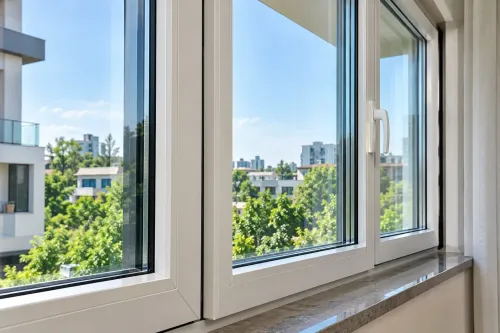
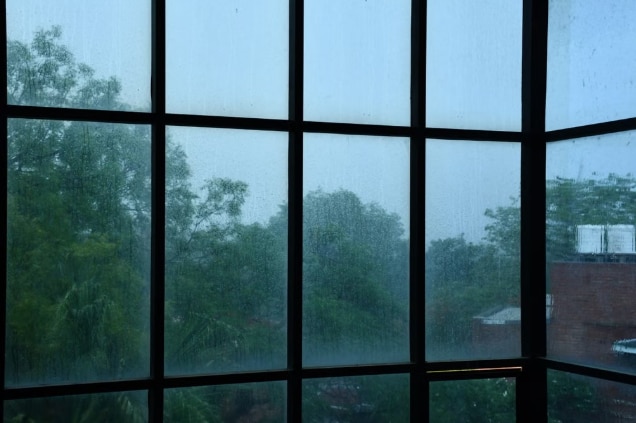
Toughened glass can suit an exterior facade during the monsoon, but its strength does not make the surrounding system watertight. You will be able to assess wind exposure, choose a glass build-up, and check the drainage, seals, frames and maintenance details that determine whether the facade performs through heavy rain and humidity.
Key takeaways
- Treat glass strength and facade weatherproofing as separate design problems.
- Match pane thickness and size to wind exposure, supports and building height.
- Use drained joints, pressure-equalised seals and corrosion-resistant edge details.
- Inspect gaskets, sealant, drainage paths and glass after each monsoon season.
Is toughened glass suitable for a monsoon facade?
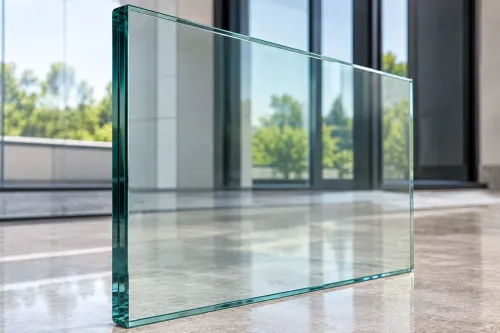
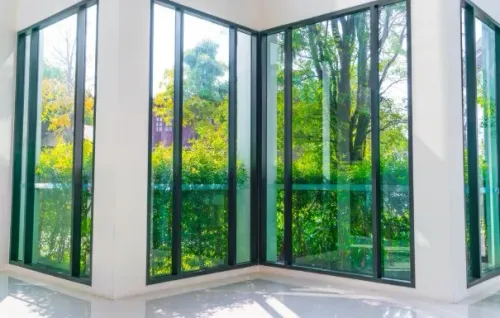
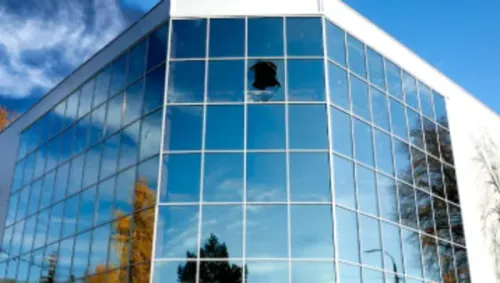
Toughened glass is suitable for an exterior facade in Chhattisgarh and Odisha, but its strength does not make the facade weatherproof. A toughened glass facade can withstand impact and thermal stress better than ordinary annealed glass; it cannot stop leakage, failed seals, frame movement, corrosion or blocked drainage.
Monsoon exposure attacks the assembly in several ways. Intense rain and wind-driven water test joints and drainage paths, while humidity promotes algae on shaded surfaces. Dust sticks to wet glass, and repeated wetting and drying leaves mineral marks that become harder to remove.
In Chhattisgarh, construction residue and alkaline wash water can also damage coatings, sealants and hardware.
A facade glass monsoon assessment must examine the complete system, not select glass from rainfall alone. Check these points:
- Calculate wind demand under IS 875 (Part 3):2015 using site conditions, pane dimensions, support edges and allowable deflection; rainfall intensity does not determine glass thickness.
- Verify continuous gaskets, sealed joints, drained rebates, open weep holes and unobstructed drainage paths.
- Check glass bite, edge clearances and setting-block position; a misplaced block can obstruct drainage or concentrate stress.
- Review corrosion protection for frames, brackets and fasteners, especially in coastal Odisha where chloride exposure accelerates corrosion.
- Plan cleaning that avoids dry scraping, abrasive pads and aggressive chemicals.
The decision belongs to the facade assembly: glass, frame, seals, fixings, drainage and maintenance access together.
How wind exposure determines glass thickness and pane design
Select pane thickness and size from calculated design wind pressure, not monsoon severity or rainfall totals. Under IS 875 (Part 3):2015, use the site basic wind speed and applicable risk, terrain, height, topography and cyclonic-region factors before checking the glass.
1. For toughened glass in Chhattisgarh, obtain a site-specific pressure assessment because terrain, building height and local storm exposure can change the governing load. For toughened glass Odisha, distinguish coastal and near-coastal sites from inland districts; exposed corners, parapets, roof-level glazing and tall buildings need separate review.
2. Record pane dimensions, the number of supported edges, fixing method, allowable glass deflection, glass bite and edge clearances. A larger pane or fewer supported edges increases deflection and fixing demand, while extra thickness cannot correct inadequate bite or poor support.
3. Complete every hole, cut-out, notch, arris and other edge treatment before tempering. Toughened glass cannot be drilled or cut on site; a late fitting change can require a replacement pane.
4. Specify heat-soak testing by its applicable standard, test lot, traceability and acceptance records. The process reduces, but does not eliminate, nickel-sulfide-related spontaneous breakage, so “heat-soaked” alone is not a zero-breakage guarantee.
Which glass build-up fits safety, heat and moisture requirements?
Choose the build-up from the failure you must prevent: monolithic toughened glass suits low-level, fully supported areas where breakage will not create a fall or weather opening. It breaks into small blunt particles but normally leaves the opening unretained.
| Option | Safety and moisture behaviour | Best fit |
|---|---|---|
| Monolithic toughened | No post-breakage retention; lowest replacement weight | Non-overhead, low-consequence areas |
| Laminated toughened | Interlayer retains fragments and can preserve weather protection | Fall-through risk, overhead glazing and required retention periods |
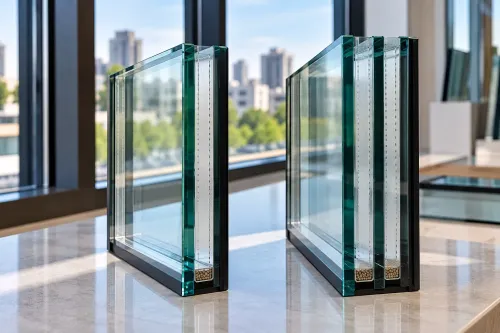
| Toughened insulating glass unit | Improves heat and sound control; depends on edge seals and desiccant | Conditioned interiors requiring solar or thermal control |
| Combination | Laminated outer or inner pane with an insulating cavity | Facades needing retention, low-emissivity control and acoustic performance |
Do not assume two toughened plies provide retention. Name the interlayer, thickness, edge exposure, support, retention period and post-breakage behaviour; ordinary PVB needs protected, well-drained edges and compatible sealants. A toughened glass facade specification that says only “toughened glass for facade monsoon odisha in chhattisgarh” is incomplete.
Check these separately:
- Room-side condensation, governed by indoor humidity, glass temperature and ventilation
- Moisture between panes, which indicates seal or installation failure
- Thermal breakage from decals, blinds, spandrels, projections and partial shade
- Solar control, acoustic performance, replacement weight and corrosion at supports
Toughened glass is the wrong choice where retention, thermal gradients or impact consequences exceed what the build-up can safely manage. The project engineer must identify the governing facade-system specification, then record the required edge seals, drainage and frame compatibility.
What facade details stop wind-driven rain at joints and edges?
Leakage usually reflects a drainage or pressure-management failure, not weak glass. A facade glass monsoon detail needs mullions and transoms with a pressure-equalized cavity, drained glazing rebates, continuous drainage paths and open weep holes. Gaskets, pressure plates, structural silicone, flashings, sill slopes and perimeter sealants must direct water outward, not trap it.
Use this site-detail checklist:
- Keep weeps open. Do not block them with sealant, debris, paint or misplaced setting blocks; install end dams at sill and transom intersections.
- Detail slab edges, corners, parapets, penetrations and window-to-wall interfaces with back dams, flashings, sealed transitions and a positive sill slope. These are common entry points for wind-driven rain.
- Confirm glass bite, edge clearances, gasket continuity, setting-block material and position, pressure-plate engagement and sealant joint width. A displaced block can close a drainage route or force glass against metal.
- Test adhesion and compatibility using the actual glass coating, spacer, gasket, setting block, frame finish and sealant. Follow the sealant manufacturer’s substrate preparation, cure conditions and joint geometry; adhesion to bare glass does not prove adhesion to low-e coating, anodized aluminium or powder coating.
- For toughened glass Odisha projects near the coast, specify corrosion performance for fasteners, brackets and anchors, protective coatings, drainage and dissimilar-metal isolation. “Stainless steel” alone identifies no grade or chloride resistance.
How to inspect, clean and procure a facade that will last
Before installation, demand the IS 875 (Part 3):2015 wind-design calculation, pane dimensions, glass thickness and build-up, allowable deflection, glass bite and edge clearances. Confirm all holes, cut-outs and edge treatments were completed before tempering; toughened glass cannot be drilled or cut on site.
- Match each pane to a traceability record showing batch or pane identification, build-up and heat-soak records where specified. Check setting-block material, size and position, gasket continuity, sealant adhesion, joint geometry, drained rebates and unobstructed weep paths.
- At handover, test drainage and inspect corners, parapets, penetrations and window-to-wall joints. Record replacement access, anchor points, walkways and other safe maintenance access; a thick pane cannot compensate for blocked drains or unsafe servicing.
- Protect glass and hardware from cement, welding debris and alkaline wash water. For toughened glass in Chhattisgarh, rinse dust and mineral deposits with clean water and a compatible mild cleaner; never dry-scrape, use abrasive pads or apply aggressive chemicals that attack coatings, glass or sealants.
A procurement brief for toughened glass for facade monsoon odisha in chhattisgarh should assign these checks across glass, frames and installation. Jivan Industries can help coordinate that evidence instead of treating toughened glass as a standalone product.
Investigate fogging between insulating-unit panes, persistent interior leaks, cracked sealant, corrosion, blocked drains, recurring water marks or algae. Each points to a drainage, seal, material or maintenance failure—not simply weak glass.
Frequently asked questions
Is toughened glass suitable for a monsoon facade in Chhattisgarh and Odisha?
Yes, but toughened glass alone does not prevent leakage. The facade also needs correctly designed frames, seals, joints and drainage.
How does wind exposure determine glass thickness and pane design?
Specify thickness and pane dimensions from the building’s wind exposure, height, local terrain, support conditions and design pressure. Do not choose glass by thickness alone.
Which glass build-up fits safety, heat and moisture requirements?
Compare monolithic toughened, laminated and insulating glass against safety, solar heat, thermal stress, sound and moisture requirements before selecting the build-up.
What facade details stop wind-driven rain at joints and edges?
Use drained and ventilated cavities, continuous gaskets, correctly tooled sealant joints, protected weep holes and corrosion-resistant edge and fixing details.
How should you inspect and clean a toughened glass facade?
Check glass damage, gaskets, sealant, fixings, corrosion, blocked drainage and frame movement. Clean with clean water and a non-abrasive method, then record defects for repair.