Choosing between DGU and TGU depends on more than the number of panes. By comparing thermal, acoustic and solar performance with weight, frame fit, safety requirements, specifications and installation responsibilities, you can select the unit that suits your building rather than paying for performance your façade cannot use.
Key takeaways
- Choose TGU for higher insulation and warmer interior glass surfaces.
- Choose DGU when frame depth, budget or installation limits rule out TGU.
- Demand cavity gas, low-E coating, thickness and performance data in writing.
- Match the glass unit thickness to the frame before placing an order.
TGU versus DGU glass: which unit suits your building?
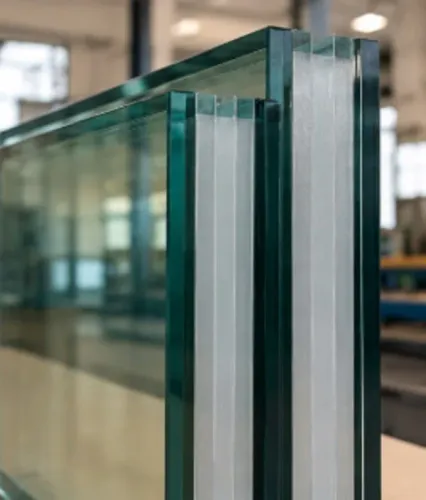
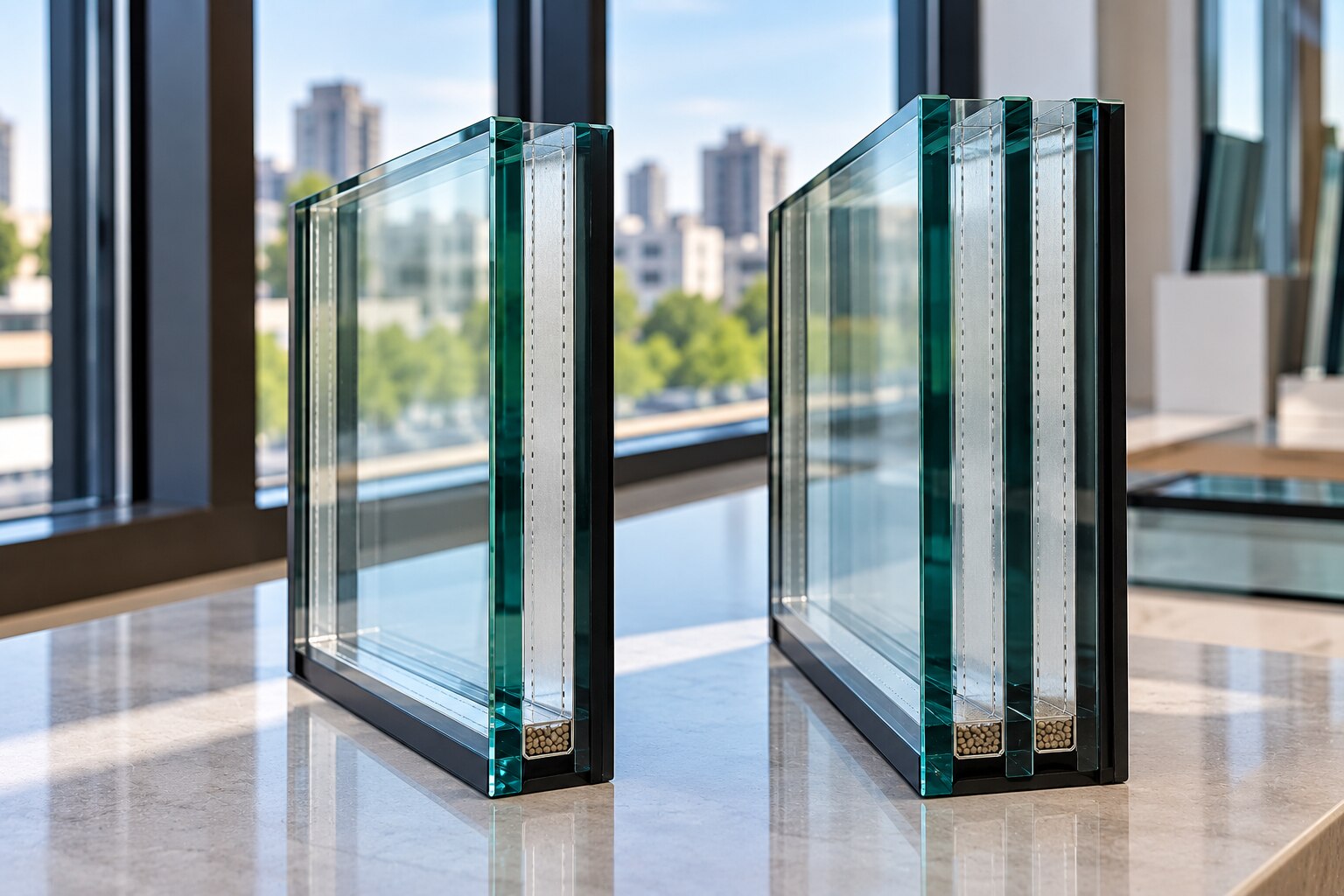
Choose TGU for maximum insulation and surface comfort; choose DGU when the frame, budget or installation conditions favour a simpler unit. TGU is a triple-glazed unit with three panes and two sealed cavities. DGU has two panes and one sealed cavity, and both are insulated glass units.
| Option | TGU | DGU |
|---|---|---|
| Thermal insulation | Lower centre-of-glass heat transfer; warmer interior pane | Good insulation with less depth |
| Traffic noise | Extra pane and cavity can improve reduction; glass make-up still controls the result | Effective, but often less capable for demanding noise control |
| Solar gain | Additional coating can reduce solar gain, daylight and winter sun | More straightforward to tune for daylight and solar control |
| Weight and thickness | Heavier and thicker | Lighter and thinner |
| Frame compatibility | Needs deeper rebates, suitable hardware and drainage clearance | Fits more existing frames |
| Cost and installation | Higher material, fabrication and installation cost | Less expensive and easier to handle |
Pane count alone cannot decide the specification. Compare the complete window U-value, solar heat gain coefficient or g-value, visible light transmission and sound-reduction rating. A TGU earns its extra cost when winter heat retention, low interior-surface temperatures or demanding traffic-noise control justify added depth and weight.
DGU is the practical choice when existing frames, hardware, drainage paths or budget cannot accommodate a deeper unit. Ask a DGU glass or TGU glass dealer in Orissa for the complete sealed-unit specification, not merely “double” or “triple” glazing.
Cavity gas and low-E coating change the result
Air-filled cavities provide basic insulation; argon-filled cavities reduce heat transfer further when the cavity width is suitable and both the primary and secondary edge seals remain intact. If either seal fails, argon escapes and the stated thermal performance no longer has a reliable basis.
| Cavity option | Thermal result | What to verify |
|---|---|---|
| Air | Higher heat transfer through the cavity | State “air-filled” in the unit specification |
| Argon, 12–16 mm cavity | Lower cavity heat transfer within a commonly useful range | Declared fill percentage, verification method or certificate, and seal condition |
| Argon, excessively wide cavity | Not automatically better; internal convection can reduce the expected gain | Exact cavity width and tested unit performance |
Ask for the sealed-unit fabricator responsible for the gas result, not merely a phrase such as “argon technology.” An insulated glass dealer orissa quotation should identify whether filling was measured, certified or only declared.
Low-E is not one specification. The coating’s pane and surface position control radiant heat exchange: a heat-retaining low-E surface can return indoor heat to the room, while a solar-control coating on a sun-exposed façade can reduce solar gain.
Require these figures before comparing quotations:
- Emissivity and the low-E product name
- Coating position, such as surface 2 or surface 3
- Solar factor, also called g-value
- Visible transmittance
Choose lower solar gain where cooling load dominates, but check daylight and useful winter sun before accepting an aggressive solar-control coating.
The specification sheet to demand from every dealer
Demand two completed columns, not two prices. Each TGU glass dealer in Orissa should identify the sealed-unit fabricator behind the quotation.
| Quote item | Dealer A | Dealer B |
|---|---|---|
| Pane make-up | Thickness and glass type for every pane | Thickness and glass type for every pane |
| Cavities | Width of each cavity; air or argon fill | Width of each cavity; air or argon fill |
| Low-E | Product, emissivity and coating surface position | Product, emissivity and coating surface position |
| Edges | Spacer material; primary and secondary seal systems | Spacer material; primary and secondary seal systems |
| Performance | Overall thickness, centre-of-glass U-value and whole-window U-value | Same figures |
| Solar and acoustic data | Solar heat gain coefficient or g-value, visible light transmission and sound-reduction rating | Same figures |
Warm-edge spacers reduce heat flow through the perimeter compared with highly conductive metal spacers. That keeps the glass edge warmer and lowers perimeter condensation risk in humid coastal Odisha, although the primary and secondary seals still must block moisture ingress.
Ask whether the unit is factory-sealed, locally fabricated, locally resold or assembled on site. Require:
- Test reports, gas-fill verification method, warranty period, and the sealed-unit fabricator’s name.
- Permitted transport and storage conditions, plus written responsibility for replacement.
- Delivery evidence covering dimensions, squareness, coating orientation, spacer continuity, sealant continuity, corner condition, safety markings and internal moisture.
Persistent fogging between panes indicates seal failure. Room-side condensation is different: assess indoor humidity, ventilation and the room-side surface temperature before blaming the IGU.
Match unit thickness to the frame before ordering
A thicker TGU can stop an existing sash from closing, even when its pane dimensions are correct. Measure the frame before choosing the sealed unit; nominal pane size alone is not enough.
1. Record the frame’s rebate depth, glazing-bead profile, sash clearance, gasket or seal dimensions, drainage-slot location and hardware movement. Measure aluminium, uPVC or timber frames at several points because distortion can reduce the available space.
2. Ask the system supplier for the maximum sealed-unit thickness and a frame-section drawing. Check that the proposed unit leaves sufficient edge cover and does not prevent the bead from seating, block drainage, or interfere with locks and hinges.
3. Confirm the weight before ordering. TGU adds another pane and can overload a sash, so the frame or hardware may need reinforcement. Request a site measurement when the existing frame is irregular or damaged.
4. Install the unit on correctly sized setting blocks with the specified edge clearance. Keep the frame level and square, use sealants compatible with the gasket and edge seal, protect the glass from site damage, and operate the sash after installation to check movement.
5. Inspect delivery before fitting. Check dimensions, squareness, pane and coating orientation, cavity and spacer continuity, corner condition, sealant continuity, visible defects, required safety markings and internal moisture. Fogging between panes indicates seal failure; room-side condensation is a separate humidity and surface-temperature issue.
Choose for the actual problem, then verify the dealer
Choose the specification for the dominant problem, not simply the pane count. Summer heat calls for low solar gain plus external shading; winter heat retention favours low U-value and suitable low-E glass; traffic noise demands the tested acoustic rating; condensation control depends on surface temperature, spacer and indoor humidity.
| Problem | What to prioritise | Common mistake |
|---|---|---|
| Summer heat | External shading, overhangs, fins, façade orientation and low g-value | A highly insulating, high-solar-gain unit can still overheat a room |
| Winter heat | Low whole-window U-value and appropriate low-E position | Choosing solar control that blocks useful winter sun |
| Traffic noise | Sound-reduction rating, asymmetric panes and airtight frames | Assuming TGU always gives the best acoustic result |
| Condensation | Warm-edge spacer, surface temperature, ventilation and humidity control | Blaming every water mark on a failed sealed unit |
| Safety | Specified tempered or laminated build-up and documented classification | Treating DGU or TGU as automatic safety glass |
External shading and the frame-to-glass ratio can reduce cooling demand more than changing DGU to TGU. DGU and TGU describe insulated construction, not safety performance.
For a door, low-level pane, overhead glazing or impact-prone location, request the required tempered or laminated build-up and a separate classification such as EN 12600 or IS 2553 where applicable. Tempered glass breaks into smaller fragments; laminated glass retains fragments after breakage.
When comparing a DGU glass dealer in Chhattisgarh with an Orissa supplier, ask Jivan Industries whether it supplies factory-sealed units, arranges fabrication or resells panes. Tie warranty, test documents and replacement responsibility to the sealed-unit fabricator.
Related product
 | A double unit comprises of two panes of glass. These two panes of glass are held apart by a spacer bar. View product → |
Frequently asked questions
What is the difference between TGU and DGU glass?
DGU has two panes and one sealed cavity; TGU has three panes and two sealed cavities.
Does cavity gas or low-E coating affect DGU and TGU performance?
Yes. The gas fill and low-E coating change insulation, solar control and interior surface comfort.
What specifications should you request from a glass dealer in Orissa?
Request pane and cavity thicknesses, gas type, low-E coating, U-value, solar factor, visible transmittance and seal details.
How do you choose between DGU and TGU glass?
Choose TGU for maximum insulation and surface comfort; choose DGU when the frame, budget or installation conditions favour a simpler unit.
Keywords