A commercial quote for extra clear toughened glass covers more than a pane and a thickness: fabrication, heat treatment, inspection, packing and delivery all affect what you receive. By checking the glass build-up, approved dimensions, post-breakage performance and excluded site work, you can compare a toughened glass quote accurately and avoid costly rework.
Key takeaways
- Specify glass thickness, panel sizes, edgework, holes and cut-outs before toughening.
- Require the quote to separate glass, processing, hardware, packing, transport and installation.
- Use monolithic glass for suitable applications, not every commercial safety or overhead glazing need.
- Approve a physical sample and inspect delivered panels before installation.
What extra clear toughened glass actually specifies
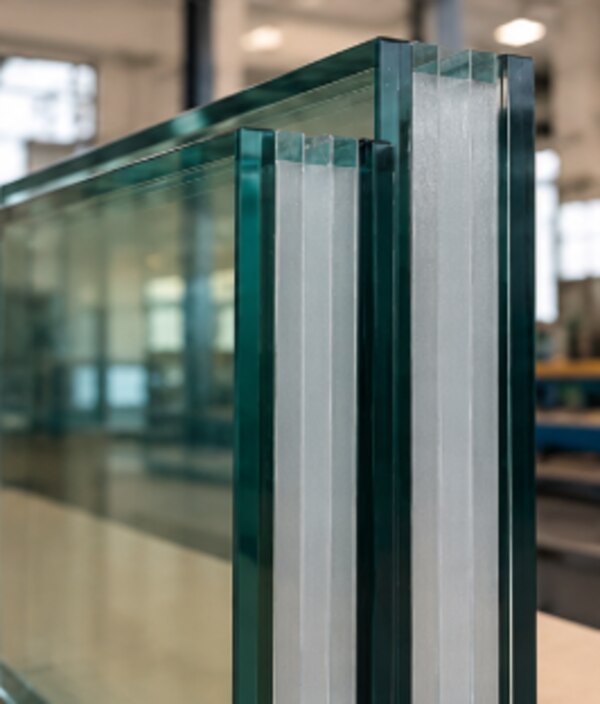
Extra clear toughened glass is low-iron float glass that has undergone thermal toughening. Removing much of the iron reduces the green tint found in standard clear glass, especially at thicker edges, and produces more neutral colour, higher visible-light transmission and clearer views.
Extra clear is not a safety treatment: it does not provide impact protection, fall retention, solar control or thermal insulation by itself.
| Feature | Standard clear toughened glass | Extra clear toughened glass |
|---|---|---|
| Base glass | Ordinary clear float glass with a noticeable green cast | Low-iron float glass with reduced green cast |
| White backgrounds | Whites can appear slightly green, especially through thick panes | Whites look cleaner and more neutral |
| Displays and interiors | Colours can shift subtly behind the glass | Product colours and finishes appear closer to their true appearance |
| Daylight | Good transmission | Usually higher transmission, with greater solar energy entering |
| Safety performance | Provided by thermal toughening | Provided by thermal toughening, not by the low-iron content |
For extra clear toughened glass for commercial projects in Chhattisgarh, specify the complete make-up rather than relying on the product name. State the glass thickness, toughened classification under IS 2553 (Part 1):2018, pane dimensions, edge finish, holes or notches, cut-outs, corner treatment, surface coating and colour. Identify whether fabrication occurs before toughening.
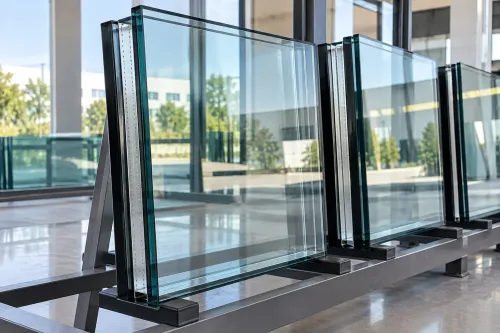
Also state whether the pane is single glazing, laminated glass or an insulated glass unit. An IGU specification must add cavity width, gas fill, spacer, seal system and low-emissivity coating position; toughened monolithic glass does not deliver the same thermal performance.
What a commercial glass quote should include line by line
A defensible toughened glass quote must separate the pane specification from fabrication, logistics and site work. The phrase “extra clear toughened glass” alone does not identify the thickness, build-up, safety treatment or finished appearance.
- Glass: low-iron extra-clear float glass, thickness, colour, coating and whether it is monolithic, laminated or an insulated glass unit (IGU).
- Size and quantity: finished pane length, width, shape, area and number of pieces, including dimensional tolerances.
- Fabrication: cutting, polished or arrissed edges, corner treatment, holes, notches, slots and other cut-outs, with drawings or templates referenced.
- Heat treatment: thermal toughening after fabrication, inspection, and any required fragmentation or heat-soak test.
- Appearance: acceptable roller-wave distortion, anisotropy, scratches, inclusions, viewing distance, lighting and inspection method.
- Packing and delivery: separators, crates, edge protection, delivery location, unloading responsibility and protection from damage.
- Site scope: measurement, structural calculations, engineering approval, frames, channels, patch fittings, gaskets, setting blocks, sealants, lifting equipment, scaffolding, installation and post-installation protection.
| Quote line | State explicitly | If omitted |
|---|---|---|
| Monolithic pane | Single glass thickness and coating | Thermal performance is unclear |
| Laminated pane | Ply thickness, interlayer and edges | Safety build-up cannot be priced |
| IGU | Cavity width, gas fill, spacer, seal system and low-emissivity coating position | It cannot be compared with single glazing |
These commercial glass inclusions prevent a low headline price from hiding essential work. Ask for each item as included, excluded or provisional in the toughened glass quote.
Which project specifications must be approved before toughening
Before any pane is cut, approve the complete fabrication drawing and glass build-up. A toughened glass project specification must state the final dimensions, thickness, quantity, shape and every feature that will be made before heat treatment.
Confirm these items in writing:
- Edge finish: arrised, flat-polished or bevelled; include corner radii and visible-edge requirements.
- Holes, slots, notches and cut-outs, with exact sizes, positions and minimum edge distances.
- Surface treatment, colour, extra-clear low-iron specification, permitted tolerances and inspection criteria.
- Safety classification under IS 2553 (Part 1):2018, rather than only “5 mm toughened glass”.
- Design loads, support conditions, wind pressure under IS 875 (Part 3), human impact and hardware loads, checked against applicable IS 16231 provisions.
- Post-breakage requirement: retained fragments, laminated interlayer or another containment method for balustrades, canopies and overhead glazing.
- Heat-soak testing to EN 14179-1 when the consequence of spontaneous breakage warrants it; record that testing reduces, not eliminates, the risk.
- Whether the build-up is single glazing, laminated glass or an IGU, including cavity width, gas fill, spacer, seal system and low-emissivity coating position.
| Build-up | Approve before ordering | Key consequence |
|---|---|---|
| Monolithic toughened | Pane and fabrication details | Breakage changes fracture pattern but does not retain the pane |
| Laminated | Interlayer and post-breakage performance | Interlayer holds fragments after breakage |
| IGU | Cavity, seals and coatings | Thermal performance depends on the complete unit |
Make the toughened glass quote match this approved schedule. Once toughened, glass cannot normally be cut, drilled or resized.
Where monolithic extra clear toughened glass fits—and where it does not
Use monolithic extra clear toughened glass for vertical shopfronts, internal partitions, display screens and framed doors where a single pane provides the required strength and no post-breakage retention is needed. It improves colour neutrality, but it does not provide fall protection, solar control or thermal insulation by itself.
| Option | What it provides | Better choice when |
|---|---|---|
| Monolithic extra clear toughened glass | One low-iron, heat-treated pane; breaks into smaller particles | The pane is vertical, retained by a suitable frame, and the main priority is clear appearance |
| Laminated glass | An interlayer retains broken fragments | Use it for balustrades, canopies, overhead glazing, large doors and any location where a broken pane must remain in place |
| Insulated glass unit | Two or more panes separated by a sealed cavity | Use it for exterior façades, where air-conditioning demand, heat gain, noise or interior surface temperature matters |
| Combined build-up | Toughened panes plus lamination, or laminated panes within an insulated unit | Use it when you need both impact retention and thermal or solar performance |
Extra clear toughened glass can transmit more daylight and solar energy than tinted or ordinary clear glass. For a glazed Chhattisgarh façade, check orientation, shading, glass area, internal loads and the project energy-code model before choosing it; a solar-control coating or insulated unit may be necessary.
Ensure the quote separates the glass make-up from commercial glass inclusions such as cutting, edgework, holes, heat treatment, packing and delivery. Confirm frames, setting blocks, sealants, installation and lifting equipment separately, because excluding them can leave a visually correct pane unusable on site.
How to verify appearance, performance and delivery before approval
Approve the supplier only after the sample, technical schedule and delivery plan agree. Your toughened glass project specifications should name IS 2553 (Part 1):2018, safety-glass classification, pane dimensions, thickness, make-up and required post-breakage performance. A toughened glass quote must also state whether the pane is monolithic, laminated or an IGU.
| Check | Ask the supplier to confirm | Reject or investigate |
|---|---|---|
| Technical | For an IGU: cavity width, gas fill, spacer, seal system, and low-emissivity coating position; also edgework, holes, notches and tolerances | “Extra clear” with no construction or coating details |
| Appearance | Inspection at the agreed viewing distance, lighting and angle; record limits for scratches, chips, roller-wave distortion and anisotropy | Iridescent stress bands or reflected-line distortion that affects the façade |
| Delivery | Pane labels, protective packing, delivery date, unloading method, site access and breakage-replacement procedure | Unlabelled crates, no handling plan or delivery promised without a date |
Do not judge performance from colour alone. Extra-clear glass admits more daylight and solar energy, so test orientation, shading, glazed area, internal loads and air-conditioning demand in the project’s energy model; solar-control coating or an IGU may be necessary.
Before approving a supplier, request these records:
- A signed drawing showing every dimension, shape, edge and fabrication before toughening.
- Inspection criteria covering flatness, visual defects and safety classification.
- Confirmation that frames, setting blocks, gaskets, sealants, installation and post-installation protection are included or excluded.
- A delivery sequence matched to floor access and storage space.
Whether you are comparing Jivan Industries or another supplier, use the same written checklist and retain the approved sample.
Related product
 | SAFTEY Keeping full focus on the industry set quality standard, we are persistently offering an affordable spectrum of Toughened Glass to our clients in... View product → |
Frequently asked questions
What should a commercial toughened glass quote include?
It should identify the glass type and thickness, panel dimensions, edgework, holes, cut-outs, tolerances, hardware, packing, transport, installation and taxes as separate line items.
Which project specifications must be approved before toughening?
Approve thickness, finished sizes, shape, edge treatment, holes, notches, cut-outs, radius details and any required markings before the glass enters the toughening process.
Where does monolithic extra clear toughened glass fit?
It suits applications that need stronger single-pane glass and a neutral appearance, but it is not a universal substitute for laminated glass, insulated units or systems designed for overhead glazing.
How can you verify extra clear toughened glass before approval?
Compare a physical sample for colour and edge tint, check dimensions and processing details against the approved drawing, and confirm packing, delivery condition and documentation.
Keywords