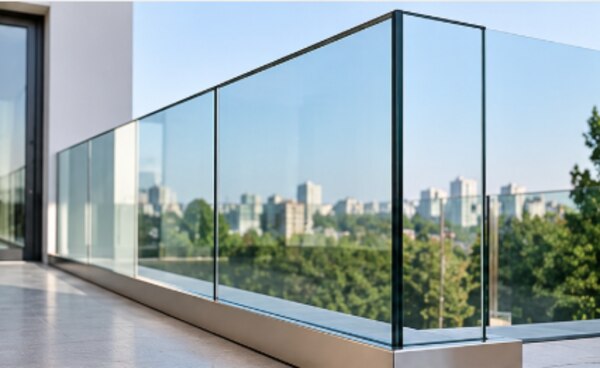
A cracked laminated pane can remain held together while its safety performance has already been compromised. You will learn how to isolate the opening, recognise damage that needs urgent replacement, clean and cover it without making matters worse, and specify a suitable replacement for buildings in Chhattisgarh and Odisha.
Key takeaways
- Isolate damaged glass on both sides before touching or cleaning it.
- Treat overhead, sloping and high-traffic panes as immediate replacement hazards.
- Protect exposed interlayers and edges from water, heat and debris.
- Verify glass thickness, interlayer type, dimensions and safety markings before replacement.
Secure the damaged pane before anyone touches it
Isolate the damaged glazing immediately: keep people away on both sides and assume overhead, sloping or high-traffic glass is an immediate hazard.
1. Move furniture, displays and loose objects away from the pane. Stop anyone leaning on it, opening it, touching it or cleaning it. Place a temporary barrier far enough away to prevent contact; do not tape cardboard or plywood directly onto the glass.
2. Control rain and debris without loading the damaged lite. If fragments, a hole or an exposed edge could admit water, use weatherproof sheeting or an engineered boarding system supported by the surrounding frame or structure.
Do not drill, screw, clamp, press or tape across the crack, and do not cover a damaged edge with sealant as a substitute for factory protection.
3. Photograph both sides, then record the approximate crack length, impact location, hole size, edge condition and whether the pane moves in its frame. Note exposed interlayer, whitening, bubbles, frame distortion and displaced setting blocks; photographs alone are insufficient for laminated glass repair guidance.
4. Keep the area isolated until a qualified glazier confirms that temporary protection is stable. This is basic laminated safety glass maintenance after an incident, not a repair: do not disturb the pane while waiting for inspection, particularly during rain, strong wind or heavy foot traffic.
Tell a cracked laminated pane from other glazing failures
A laminated glass damaged pane usually stays broadly in place: one or both glass plies crack, while the interlayer holds fragments together. That retention does not make the pane safe; cracks can extend under wind, heat or frame movement.
A toughened pane instead breaks into a dense pattern of small, pebble-like pieces and may collapse when disturbed. Ordinary single glazing has no interlayer, so cracked sections can become loose, sharp and falling.
Fogging, droplets or persistent haze between panes indicate moisture in a double-glazed unit (DGU) cavity, not necessarily a crack in the laminated lite.
Record these inspection findings before ordering replacement:
- Crack pattern, approximate length and location
- Hole or impact size, edge impact and sharp protrusions
- Whitening, bubbles, lifting, exposed PVB or a visible gap between glass and interlayer
- Frame distortion, glass movement, displaced setting blocks and loss of support
- Whether the pane is monolithic laminated glass or one lite of a DGU
Treat through-cracks, punctures, shattered outer plies, edge delamination or any movement as replacement issues. Do not drill, polish, edge-grind, chemically strip, clamp or inject resin into the damaged area; these actions cannot restore the original bond, impact classification or design capacity.
A pane that looks intact from one side is not cleared by the interlayer. Use this laminated glass repair guidance to classify the failure, but obtain a qualified replacement assessment rather than relying on photographs alone.
Decide whether the pane can stay temporarily or needs replacement
A cracked laminated glass pane is normally a replacement item, not a repair item. Resin injection, polishing, drilling, edge grinding and site clamping cannot restore its original impact classification, interlayer bond, optical quality or design capacity.
1. Arrange urgent removal when the laminated glass damaged pane is overhead, externally exposed, in a school, shop or entrance, unstable in its frame, damaged at an edge, or exposed to wind and falling debris. Cracks can extend under movement or impact even while the interlayer holds fragments together.
2. A stable vertical pane in a protected, low-traffic interior location may remain behind a barrier only while replacement is arranged. There is no universal safe number of days.
Reassess after wind, impact or frame movement, and record the crack pattern, approximate length and location, hole size, edge condition, interlayer exposure, whitening, bubbles, frame distortion, setting-block position and pane movement.
3. Confirm whether the pane is monolithic laminated glass or one lite of a DGU. If it belongs to a sealed insulating unit, replacing only the laminated lite on site destroys the factory moisture barrier and gas-fill performance. Order a complete remanufactured sealed unit unless a controlled manufacturer process specifies otherwise.
This laminated glass repair guidance means polishing or filling is not an equivalent repair. Do not substitute ordinary annealed glass for the specified safety laminate.
Clean and protect exposed edges through heat and monsoon weather
Clean damaged laminated safety glass with clean water, a mild non-abrasive detergent and a soft cloth or sponge. Remove cement splashes, labels and dust promptly, but do not force liquid into a crack, hole or exposed edge.
Do not use:
- Razor blades or scrapers
- Abrasive pads
- Strong alkaline cleaners
- Concentrated solvents
These materials can scratch the glass, attack coatings, or damage exposed interlayers and sealants. Do not flood the frame or leave a wet cloth against the bottom seal.
Keep rainwater away from cracks, punctures and delaminated edges. A temporary sheet can control rain, but keep it off the damaged pane and prevent it from trapping heat against the glass. High heat increases movement between the glass, frame and damaged area; strong sunlight can warm a covering and create a damaging temperature difference.
For laminated glass damage care in Chhattisgarh and Orissa, monsoon rain, humidity and dust raise the risk of moisture entering the perimeter. Blocked drainage or water standing at the sill can promote whitening, bubbles and edge delamination. A site-applied coating cannot recreate the original factory edge seal.
After heavy rain, inspect:
- Corners and gaskets
- Sealant joints
- Setting blocks
- Sill drainage paths
Shorten the replacement window when the opening is external, overhead or repeatedly wet. Laminated safety glass maintenance cannot make a cracked or delaminated pane safe again.
Specify and verify the replacement before installation
A replacement order needs the original performance specification, not just the pane’s thickness and colour. For glass replacement in Orissa, use the same discipline as laminated glass for damage care in Chhattisgarh and Orissa: document what failed before anyone fabricates a substitute.
1. Record the crack pattern, approximate length and location, hole or impact size, edge condition, exposed interlayer, whitening, bubbles, frame distortion, setting-block position and whether the pane is monolithic laminated glass or part of a DGU.
2. Give the fabricator the glass make-up, interlayer type and thickness, heat-treatment condition, exact dimensions, edgework, holes, notches, coatings and insulating-unit configuration. State the performance class and required human-impact, wind-load, overhead, acoustic, solar-control and security classifications.
3. Before fabrication, check the rebate depth, opening dimensions, frame squareness, drainage, setting-block positions, edge clearances and gasket or sealant compatibility. A pane that fits the opening can crack when its edge touches the frame or thermal movement is restrained.
4. Require traceable glass and interlayer identification, dimensions, manufacturing date or batch information, safety classification and installation records. Ask for the proposed make-up and installation method in writing, including glass replacement in Orissa, officially Odisha.
5. A supplier such as Jivan Industries is useful when the damaged unit must be assessed against the original specification rather than replaced with ordinary annealed glass. Confirm every detail before cutting; a wrong substitute is difficult to correct after delivery.
Related product
 | Laminated Glass is a safety and security glass that is made by sandwiching a laminated sheet between two pieces of glass. View product → |
Frequently asked questions
How should you secure a damaged laminated glass pane?
Keep people away from both faces, cordon off the area and avoid pressing, drilling or cleaning the pane. Overhead, sloping and high-traffic glazing requires immediate professional assessment.
How can you tell a cracked laminated pane from another glazing failure?
Laminated glass holds fragments together through an interlayer. Look for a cracked face with retained shards, visible whitening or delamination, rather than loose fragments from monolithic glass or a sealed-unit failure shown by internal misting.
When can a damaged laminated pane stay temporarily?
Temporary retention is only reasonable when the pane is vertical, stable, inaccessible to impact and not supporting overhead or safety-critical glazing. Replace it promptly if the crack spreads, the interlayer is exposed or the pane moves in its frame.
How do you protect exposed edges in Chhattisgarh and Orissa weather?
Keep rainwater, standing water and cleaning chemicals away from exposed edges. Use a temporary weatherproof barrier without trapping moisture, and arrange inspection before heat and monsoon conditions worsen delamination.
What should you verify before glass replacement in Orissa or Chhattisgarh?
Confirm the opening size, glass thickness, pane dimensions, interlayer type, edge finish, colour, safety classification and fixing system. Match the replacement to the original design and obtain product identification and installation records.
Keywords