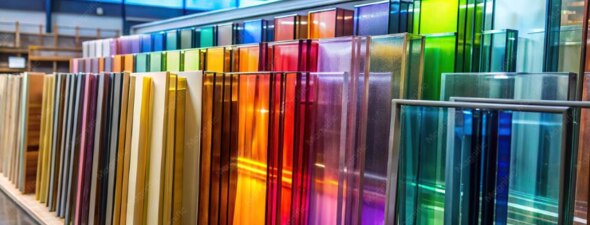
Contractors usually place these orders with regional glass processors or façade-glazing contractors, not directly with a float-glass manufacturer. The right buying route depends on the project city, the required color system, panel size, fabrication, safety use and whether the processor holds stock or must produce the laminate against order.
Key takeaways
- Order through regional processors or façade-glazing contractors in Raipur, Bhilai, Bhubaneswar, Cuttack or Rourkela.
- Confirm base glass, colored interlayer, cutting, edgework and lamination before accepting availability.
- Send dimensions, thickness, color reference, quantities, edgework and delivery details with your enquiry.
- Approve a physical color sample and record its reference before authorizing repeat production.
Where contractors place orders in Chhattisgarh and Odisha
Most contractors place colored laminated glass orders through a regional processor or façade-glazing contractor, not directly with a float-glass manufacturer. The practical supply points are Raipur–Bhilai in Chhattisgarh and Bhubaneswar–Cuttack or Rourkela in Odisha; these processors source the base glass and colored interlayer, then arrange cutting, edgework and lamination.
- Approach a Raipur processor when the project is in Chhattisgarh and you need coordinated sizing, fabrication, packing and site delivery.
- Use the project representative or façade contractor when the architect has nominated a glazing system, approved vendor or installation method. That route reduces disputes over frame bite, gaskets and responsibility for breakage.
- Contact a local distributor for standard tinted or laminated sizes, replacement panes and smaller quantities. Confirm that the distributor is selling finished laminated panels, not only unprocessed sheets.
- Ask an out-of-state fabricator for a quotation when the required color, thickness, pane size or production capacity is unavailable in Raipur–Bhilai or Odisha. Add transport, unloading, inspection and replacement time to the decision.
For colored glass contractor orders, send the delivery location and intended use with the enquiry. A colored laminated glass supplier should state whether it supplies stock or produces against order, and whether the color comes from PVB, EVA, ionoplast or already-colored glass. Reserve production only after sample and project approval.
How to verify stock, production route and architectural colored glass availability
Treat architectural colored glass availability as a stock-or-production question, not a catalogue promise. Ask a colored laminated glass supplier to confirm the exact build-up, color, thickness, pane size and quantity physically available. Non-stock colors, low-iron glass, special opacity, large panes and replacement panels can require a separate interlayer order and production slot.
- Ask whether the color comes from colored PVB, EVA, ionoplast or tinted/body-tinted glass. Request the interlayer thickness, visible light transmission and sample view against both light and dark backgrounds; a colored interlayer is not automatically opaque privacy glass.
- Confirm the production route. PVB uses controlled assembly, de-airing, heat and pressure in an autoclave. EVA suits decorative, printed or fabric work, but the fabricator must validate exterior exposure and pane size. Ionoplast may be selected where higher stiffness is required.
- Obtain minimum and maximum pane dimensions, thickness combinations, usable sheet size and fabrication capacity. Include yield for holes, notches, corner cut-outs and orientation-sensitive patterns.
- Confirm that cutting, drilling, polishing and CNC shaping will finish before lamination. Do not plan site drilling after delivery.
- Request current stock status, batch availability, replacement lead time and the earliest production-release date.
| Route | What to verify | Procurement consequence |
|---|---|---|
| Colored PVB | Autoclave capability and exposure rating | Order against batch or slot |
| EVA | Exterior validation and moisture protection | Decorative work may need separate approval |
| Ionoplast | Thickness, stiffness and size limit | Confirm fabrication capacity |
| Tinted glass | Base-glass color and matching stock | Color cannot be changed through interlayer selection |
What to send with a colored glass enquiry before quotation
Send a dimensioned drawing and a panel schedule with the enquiry. A color name alone cannot produce a repeatable quotation: the processor needs the complete glass build-up, fabrication details and site logistics for each panel.
1. State the glass type, thickness and heat-treatment requirement, such as annealed, toughened or heat-strengthened glass. Give the interlayer type—colored PVB, EVA or ionoplast—its nominal thickness, and the finished overall thickness.
2. Provide a recognized color reference, sample code or physical swatch. Describe the required transparency, privacy level and viewing condition; colored laminated glass is not automatically opaque. Note any opaque backing, ceramic frit, printed layer or textured orientation.
3. Include every pane dimension, maximum panel size, quantity by size, panel mark and installation orientation. Add a dimensioned elevation showing holes, notches, cut-outs, corner radii and their edge references.
4. Specify edgework for every exposed edge: arrised, seamed, polished, flat-polished or concealed. State whether holes and shaping require CNC work, and confirm that all cutting, drilling and polishing must finish before laminated colored glass processing.
5. Attach the glass schedule, hardware details and approved shop drawings, including gasket or channel clearances. Identify replacement panels separately from new panels.
6. Give the delivery location, floor or unloading point, required date, packing constraints and whether delivery is to Raipur, another Chhattisgarh site or Odisha. This lets the supplier price transport, handling and breakage risk accurately for colored glass contractor orders.
How to approve color and control repeat batches
Approve the colour from a physical laminated sample, not a digital code or phone photograph. View it against the proposed frame and background in daylight, then under the project’s interior artificial lighting. Glass transmits and reflects light, so sky conditions, room illumination and background colour can change the façade appearance.
| Check | Physical sample | Full-size or near-full-size mock-up |
|---|---|---|
| Colour and transmission | Compare shade, opacity and visible light transmission | Confirm the façade appearance at viewing distance |
| Edges and interfaces | Inspect edge colour and clarity | Check frame bite, gasket compatibility, holes and frit alignment |
| Lighting | View outdoors in daylight and under specified lamps | Repeat both checks at the actual elevation or representative room |
- Record the approved sample number, glass make-up, base-glass tint, interlayer type and thickness, colour reference, transparency, surface orientation and approval date. Photograph the sample for identification, but do not use the photograph as the colour standard.
- Ask the processor to confirm whether laminated colored glass processing uses coloured PVB, EVA, ionoplast or already-coloured glass. These routes are not interchangeable, and architectural colored glass availability may change with stock, size, opacity and low-iron requirements.
- State the permitted colour tolerance before production release. Define it against the signed sample or mock-up, with separate limits for shade, opacity and visible defects; do not accept “close match” as a tolerance.
- Release the batch only after written approval. Keep the interlayer lot, glass batch, panel numbers and mock-up result with the purchase order, and require replacement panels to match that record.
What the processor must confirm before releasing production
Before releasing production, obtain a written confirmation that the selected colored glass build-up can be fabricated, transported and replaced at the project site.
1. Confirm dimensions and build-up. Record the minimum and maximum pane size, glass thickness and type, overall thickness, panel weight, edge finish, holes, notches, corner cut-outs and heat-treatment requirement. A colored glass contractor order is incomplete if it names only “blue” or “grey” glass.
2. Confirm the interlayer. Ask whether the color uses PVB, EVA or ionoplast, then record its nominal thickness, transparency, approved color reference and stock status. Ask the colored laminated glass supplier whether the material is a stock item or a non-stock production batch.
3. Confirm pre-lamination work. Cutting, drilling, polishing, notching, CNC shaping, printing and frit alignment must be completed before lamination. The delivered panel cannot be cut or drilled like monolithic glass.
4. Confirm safety evidence. Request the test report or compliance document for the exact glass and interlayer combination, including the declared safety-glass standard, impact classification and production identification. Do not accept evidence for a different thickness or color.
5. Confirm protection and replacements. Specify edge sealing or protection, separators, corner guards, packing orientation and handling limits. Reserve extra panels after allowing for fabrication yield, and obtain the replacement lead time if the colored interlayer is not stocked.
For a Raipur project, ask Jivan Industries to state these points on its quotation; use the same checklist with any processor handling laminated colored glass processing. Approve one sample and a near-full-size mock-up before releasing the batch.
Related product
 | Laminated Glass is a safety and security glass that is made by sandwiching a laminated sheet between two pieces of glass. View product → |
Frequently asked questions
Where do contractors place colored laminated glass orders in Chhattisgarh and Odisha?
Contractors commonly approach regional processors or façade-glazing contractors in Raipur–Bhilai, Bhubaneswar–Cuttack and Rourkela. These suppliers coordinate base glass, colored interlayer, cutting, edgework and lamination.
How can you verify architectural colored glass availability?
Ask whether the supplier has the required base glass and colored interlayer in stock, or must source them. Confirm the production route, including cutting, edgework and lamination, before relying on a quoted lead time.
What should you include in a colored glass enquiry?
Provide panel dimensions, glass thickness, color reference, quantity, edgework requirements, application, delivery location and required date so the processor can prepare an accurate quotation.
How do you control color across repeat laminated glass batches?
Approve a physical color sample, record its reference with the order and compare later batches against that approved sample before production and installation.
What must the processor confirm before releasing production?
Confirm the base glass, colored interlayer, final build-up, panel sizes, edgework, production route, approved color reference, quantity and delivery requirements before releasing production.
Keywords