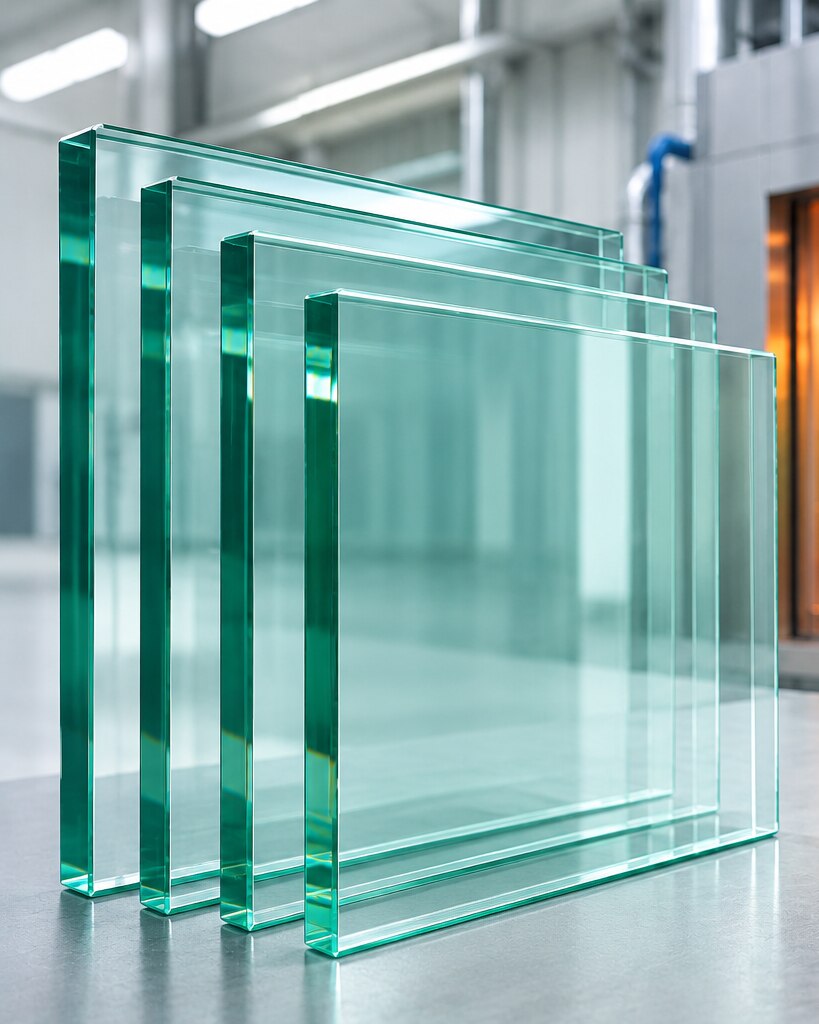
A toughened glass pane can shatter months or years after installation without impact because a microscopic nickel sulfide inclusion inside the glass can expand after tempering. By understanding how heat-soak testing exposes some vulnerable panes before delivery, you can decide when the process is worth specifying and when laminated construction, better detailing or impact protection addresses the real risk.
Key takeaways
- Heat soaking exposes nickel sulfide inclusions that could trigger delayed breakage.
- Heat soaking reduces, but does not eliminate, spontaneous breakage risk.
- Laminated glass retains fragments after breakage; toughened glass does not.
- Specify heat-soak testing when falling glass could injure people or damage property.
Why toughened glass can break without impact
A fully toughened pane can fracture months or years after installation even when no one has struck it. During manufacture, minute nickel sulfide inclusions can become trapped inside the glass.
A NiS inclusion can undergo a delayed phase transformation after tempering; its volume increase pushes against the surrounding glass until local tensile stress starts a crack. Once initiated, the pane’s stored stress can drive rapid full-pane fracture. That is spontaneous glass breakage.
Thermally toughened glass has a compressed outer surface and a tensile core. The compressed surface helps the pane resist ordinary surface impact, but the tensile core supplies the energy that turns a small internal crack into sudden failure.
The inclusion does not need to reach the surface, and the pane can appear undamaged immediately before it breaks.
A pane can also break without an NiS-related cause. Look for evidence of:
- Edge damage from cutting, handling or installation
- Thermal shock from uneven heating or shading
- Frame pressure caused by poor fit, setting blocks or building movement
- Excessive mechanical loading or deflection
These failures can occur during service even when the glass contains no nickel sulfide inclusion. “Fully toughened” describes the stress treatment and safety-fracture behaviour; it does not mean the pane is immune to delayed internal defects or installation stresses.
What the heat-soak test does to a toughened pane
A nickel sulfide (NiS) inclusion can remain hidden inside a toughened pane. After installation, it can change phase, expand and create enough internal stress to fracture the glass without impact. Heat soaking exposes this latent failure risk before the pane enters service.
- After thermal toughening, place the completed pane in a heat-soak furnace and heat it through its full thickness.
- Hold it at the commonly specified exposure temperature of 290°C ± 10°C. The elevated temperature accelerates the NiS transformation that could otherwise occur months or years later.
- If the pane breaks in the furnace, remove it from supply. A pane that survives remains in serviceable production, but the test has not removed every inclusion or guaranteed zero breakage.
This makes heat-soak testing a destructive screening process, not a strengthening treatment. Specify thermally toughened safety glass heat-soak tested under EN 14179-1; “heat-resistant glass” describes temperature performance and does not identify NiS screening. For laminated products, heat-soak each qualifying toughened lite before lamination, because the interlayer is not a substitute for testing.
What heat soaking reduces—and what it cannot prevent
Heat soaking provides risk reduction primarily for spontaneous breakage linked to nickel sulfide (NiS) inclusions in thermally toughened glass. It does not eliminate breakage caused by damage, loading or temperature change.
| Risk or condition | What heat soaking addresses | What remains after testing |
|---|---|---|
| NiS inclusion | Drives some unstable inclusions to expand and break the pane before delivery | An inclusion can survive the prescribed cycle and fail later |
| Edge damage | Nothing | Chips, shelling and coarse grinding damage can concentrate stress and trigger fracture |
| Thermal stress | Nothing | Uneven heating, shading or restraint can overstress the pane |
| Thermal shock | Nothing | A rapid temperature change can break glass that passed the test |
| Impact or mechanical loading | Nothing | Contact, frame pressure, tight clearances and excessive loads remain hazards |
| Breakage aftermath | Nothing | Monolithic toughened glass still falls into small blunt particles rather than staying retained |
A heat-soak-tested pane is not immune to spontaneous breakage. Poor edge quality, incorrect setting-block clearances and frame pressure can create failure conditions independently of NiS, while later impact can cause immediate fracture. Heat soaking also does not convert annealed glass into safety glass; the pane must already be thermally toughened.
Where fragments must remain attached after breakage, specify laminated glass with a suitable interlayer and support system.
How heat-soaked glass compares with other glass constructions
Choose heat-soaked toughened glass when a monolithic pane is acceptable, but spontaneous breakage from nickel-sulfide inclusions would have serious consequences. It is a stronger fit than ordinary toughened glass for overhead glazing, large façades and inaccessible panes where replacement or falling fragments create greater disruption.
| Construction | Better fit when | What you give up or still need |
|---|---|---|
| Ordinary toughened glass | The location accepts a small residual risk and cost control matters more than screening for NiS-related breakage | It has no heat-soak screening, and a spontaneous fracture can still occur |
| Heat-soaked toughened glass | You need monolithic safety glass with a reduced risk of NiS-related spontaneous breakage | It still breaks into blunt particles and does not address impact, edge damage, thermal shock or frame pressure |
| Heat-strengthened glass | You need lower thermal and mechanical stress than fully toughened glass, with less fragmentation after failure | It does not provide the same impact-safety performance as fully toughened glass |
| Laminated glass | Retention after breakage, fall protection, or a continuing barrier matters more than monolithic construction | The interlayer and support design add specification and fabrication requirements |
| Laminated toughened glass | You need both retained fragments and toughened-glass strength, such as in overhead or high-consequence glazing | Heat-soak each toughened lite before lamination; the interlayer does not replace that screening |
Heat soaking changes the risk profile, not the basic construction. If the pane must remain attached after fracture, choose laminated glass or laminated toughened glass with a suitable interlayer and support system instead.
How to specify heat-soaked glass for high-consequence locations
The first check is consequence: specify heat-soak testing where one spontaneous fracture could send glass into people or block a critical route. Review the risk for overhead glazing, roofs, canopies, large curtain walls, balustrades, busy entrances and entrance screens rather than applying the requirement to every toughened pane.
1. Identify the governing standard and designation. Write “thermally toughened safety glass subjected to heat-soak testing in accordance with EN 14179-1,” or cite the national standard named by the project. “Heat-resistant glass” is too vague; it can describe service-temperature performance, not screening for nickel-sulfide inclusions.
2. Confirm where the test occurs in the manufacturing sequence. The pane is heat-soaked after thermal toughening and before installation. For laminated glass, each toughened lite requiring qualification is normally tested before lamination; a PVB interlayer does not replace testing. Ask Jivan Industries or another processor for the heat-soak record, pane identification and standard designation.
3. Decide whether breakage retention is also required. Heat-soaked monolithic glass still falls into small blunt particles after fracture. Specify laminated glass, a suitable interlayer and a support system designed to retain the pane when people could be exposed below or beside it.
4. Define the limits in the specification. Heat soaking reduces, but does not eliminate, NiS-related spontaneous breakage and does not prevent failure from edge damage, impact, thermal shock, frame pressure or excessive loading. Require inspection of edges, clearances, support pressures and design loads separately.
Related products
 | Laminated Glass is a safety and security glass that is made by sandwiching a laminated sheet between two pieces of glass. View product → |
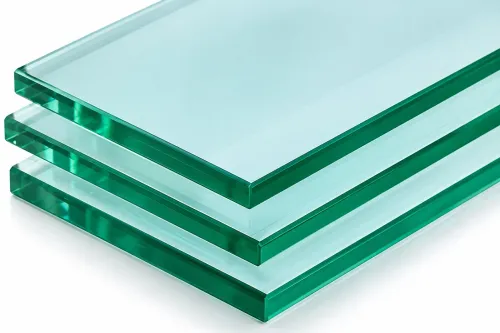
 | SAFTEY Keeping full focus on the industry set quality standard, we are persistently offering an affordable spectrum of Toughened Glass to our clients in... View product → |
Frequently asked questions
Why can toughened glass break without impact?
Minute nickel sulfide inclusions trapped in toughened glass can expand over time and trigger delayed fracture without an external impact.
What does the heat-soak test do to a toughened pane?
The test heats the pane in a controlled chamber to expose panes containing unstable nickel sulfide inclusions before installation.
What does heat soaking reduce, and what can it not prevent?
Heat soaking reduces the risk of delayed spontaneous breakage from nickel sulfide inclusions, but it cannot prevent every breakage caused by impact, edge damage, thermal stress, installation faults, or other defects.
How does heat-soaked glass compare with other glass constructions?
Heat-soaked toughened glass reduces delayed-breakage risk, while laminated glass helps retain fragments after breakage and provides a different form of safety protection.
How should you specify heat-soaked glass for high-consequence locations?
Identify the pane type, thickness, application, safety requirement, heat-soak test requirement, test documentation, and installation controls in the specification.
Related product
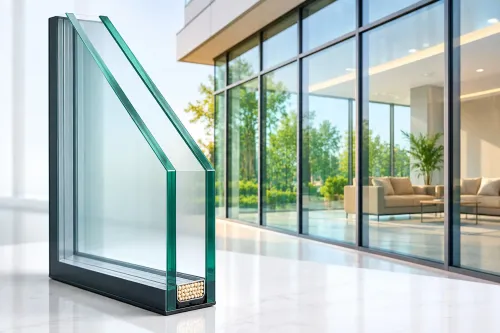
 | A double unit comprises of two panes of glass. These two panes of glass are held apart by a spacer bar. View product → |