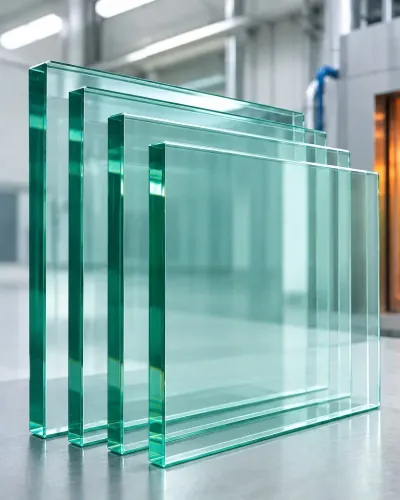
Ordinary clear glass can introduce a green cast, especially at exposed edges, in thick assemblies, and against light-coloured backgrounds. By the end, you will be able to separate optical clarity from safety, energy, privacy, and acoustic performance, then specify and inspect the glass makeup that fits the project.
Key takeaways
- Low-iron glass reduces green edge colour and produces a more neutral appearance.
- Specify thickness, coatings, laminates, heat treatment, and light transmission together.
- Choose laminated, coated, tinted, or ordinary clear glass when performance needs outweigh neutrality.
- Approve samples, colour limits, inspection methods, and replacement requirements before fabrication.
Why low-iron glass looks more neutral than ordinary clear glass
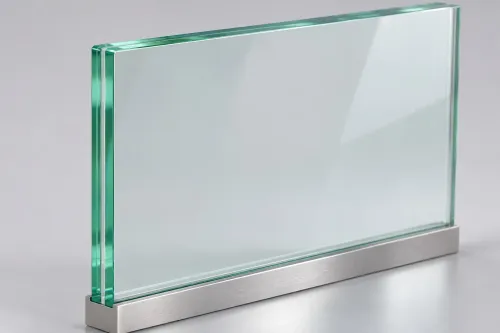
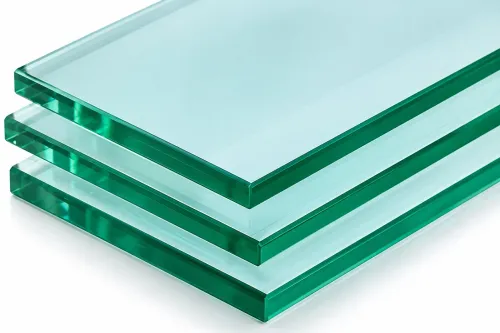
The visual difference comes mainly from iron impurities in the glass batch. Ordinary clear float glass contains more iron, whose absorption gives transmitted light a green cast; low-iron glass reduces that absorption, so extra clear glass looks brighter and more neutral, especially at its edges.
| Glass type | Iron content and edge appearance | Light and colour effect |
|---|---|---|
| Ordinary clear glass | Higher iron content; green edge visible sooner | Lower visible-light transmission and a cooler green bias |
| Extra clear glass | Reduced iron content; edge appears pale or nearly colourless | Higher transmission and more faithful colours |
| Low-iron float glass | A low-iron composition, with performance varying by supplier | Neutrality depends on the declared optical specification |
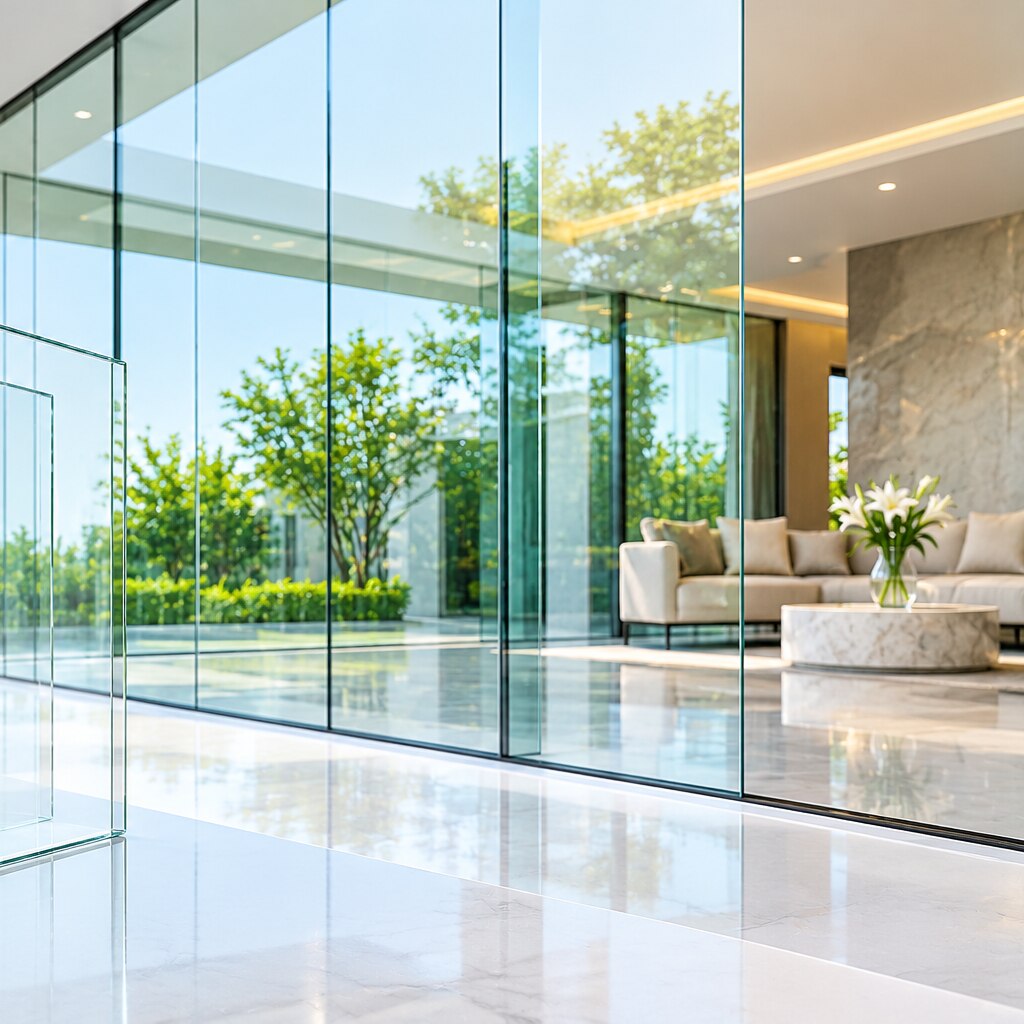
The difference is easiest to see through thick panes, laminated make-ups, insulating units, glass balustrades, doors, large shopfronts and backlit interiors. It also matters in museum cases, retail displays, hospitality interiors, skylights and façades where the glass forms part of the visual design. White backgrounds expose the green edge more clearly than dark backgrounds.
“Extra clear” and “ultra clear glass” are commercial descriptions, not one globally fixed grade. Ask for visible-light transmittance, colour coordinates or a colour-rendering tolerance, and maximum iron content. The installed assembly will differ from a single-pane value because thickness, coatings, interlayers, frit, spacers and dirt alter transmission.
Low-iron glass improves colour fidelity, not safety, security, insulation, solar control, acoustics or scratch resistance. Specify those separately.
Choose the construction, not just the optical grade
An extra clear pane does not become safer because it is optically neutral; its construction supplies strength, impact safety, or post-breakage retention. Specify extra clear toughened glass for a monolithic safety pane where fragmentation and strength are the priority. EN 12150 covers thermally toughened glass; use it for safety glass standardisation.
EN 1863 heat-strengthened glass suits designs needing lower residual stress, but it does not provide the same fragmentation behaviour as fully toughened glass.
| Construction | Main benefit | Specify when |
|---|---|---|
| Extra clear toughened glass | Strength and impact safety; breaks into small fragments | Use for doors, screens, and exposed panes where post-breakage retention is not the main requirement |
| Extra clear laminated glass | PVB interlayer holds fragments after breakage | Use for balustrades, overhead glazing, fall protection, and retention-critical areas; verify EN 14449 laminated glass compliance |
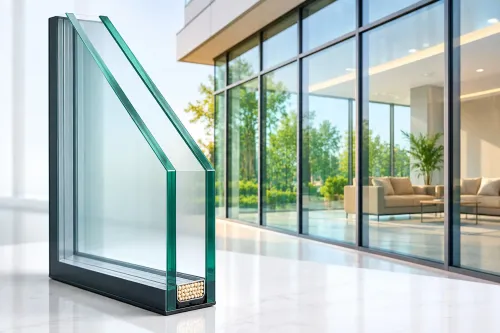
| Extra clear DGU | Two panes and a sealed cavity reduce heat transfer | Use when indoor comfort and insulation matter; select toughened or laminated panes inside the unit if safety also governs |
For a retention requirement, choose extra clear laminated glass and approve the complete glass-and-interlayer sample. A PVB interlayer can add a slight colour cast, so assess the finished makeup rather than unlaminated glass. An extra clear DGU improves comfort through insulation, but it does not automatically satisfy impact or containment requirements.
State the required safety classification, interlayer grade, cavity construction, and retention details on the schedule.
When another glass type is the better choice
Choose another glass type when heat control, glare reduction, privacy, colour masking, acoustics, or cost matters more than maximum brightness and neutral colour. Extra clear glass transmits more visible and solar light, which can increase cooling loads and glare unless coatings, frit, shading, or a smaller glazing ratio offset it.
| Option | Use it when | Trade-off versus extra clear glass |
|---|---|---|
| Extra clear glass | Colour fidelity and perceived brightness lead | Offers little solar or glare control by itself |
| Low-E glass | You need lower heat transfer and better insulation | Coating colour and reflection can reduce neutrality |
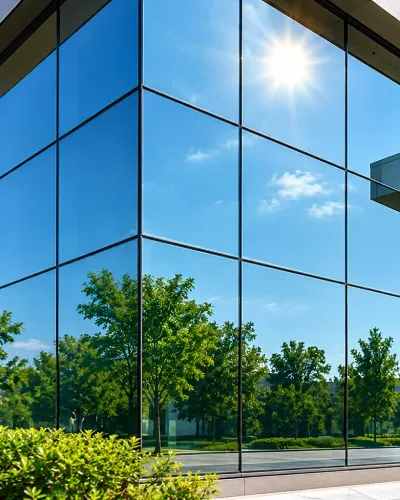
| Solar-control glass | Solar heat gain and glare drive the decision | Lower daylight or a visible tint can alter colours |
| Tinted glass | You need glare reduction or deliberate colour masking | The tint affects every viewed material and interior finish |
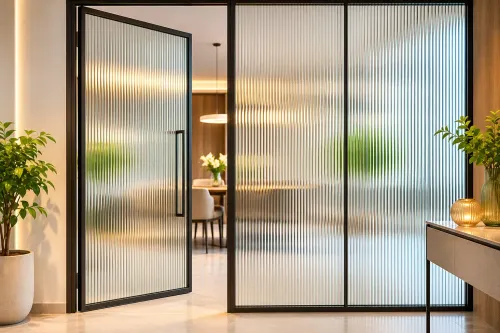
| Frosted glass | Privacy matters more than a clear view | Diffuses light and hides detail rather than improving colour fidelity |
| Ceramic-frit glass | You need patterned shading, privacy, or glare control | The pattern reduces transmission and can look uneven at close range |
| Acoustic laminated glass | Traffic or plant noise is the dominant problem | The interlayer and thickness provide the benefit, not low iron alone |
| Clear float glass | Budget and availability outweigh optical refinement | Green edge colour and lower neutrality become more visible |
You can combine these choices: low-e or solar-control coatings on a low-iron substrate preserve colour better than ordinary clear glass. Compare the complete assembly, because thickness, interlayers, frit, spacers, coatings, and dirt change installed transmission.
Specify and approve the complete visual performance
Approve the complete assembly, not a sample labelled “extra clear.” Record visible-light transmittance, solar heat gain coefficient, U-value, colour coordinates or colour-rendering tolerance, maximum iron content, thickness and tolerance, and pane size. State whether values apply to the glass or the finished DGU, because coatings, laminates, spacers, gas fill, frit and dirt change installed performance.
- Specify fabrication limits: edge exposure, coating position, laminate interlayer colour tolerance, DGU spacer and gas fill, ceramic frit coverage, edge polishing, bevels, holes, notches and cut-outs.
- Set visual tolerances for reflection colour, haze, roller-wave distortion, anisotropy, bow and warp. Require the viewing distance, lighting source, inspection angle and acceptance method on the approval sheet.
- Obtain samples showing the complete build-up, including the specified interlayer, coating, spacer and frit. A clear unlaminated pane cannot prove colour matching for a laminated DGU.
Use a physical mock-up at the intended scale before releasing production. Inspect it from the agreed interior and exterior distances in daylight and under the project’s artificial lighting, then compare adjacent panes for transmission, reflection colour, edge appearance and distortion.
Approve the exact pane size and fabrication orientation; changing thickness, coating position, gas fill or cut-outs later can alter appearance. Record signed photographs and measured results, so replacement panes are matched to the approved design rather than to a generic low-iron label.
Control handling, inspection, cost, and replacement risk
Protect the approved appearance before the crate leaves the factory: agree the technical data sheet, glass composition, specified size, edge treatment, and tolerances with the supplier. Request conformity documents, heat-treatment records, lamination records, and DGU seal and spacer details. This paperwork makes a late replacement comparable rather than a guess.
At site, control the failure points in this order:
- Unload with clean suction cups, keep edge protection in place, and store sheets at the recommended storage angle. A damaged polished edge can become a break during fitting.
- Carry out daylight inspection from the intended viewing distance before installation. Check glass defects, reflections, haze, roller-wave appearance, and scratches; record any issue before the glass enters the frame.
- Set the unit on correctly sized glazing blocks, confirm sealant compatibility, and leave the specified clearance for thermal movement. Poor setting creates installation distortion even when the glass itself passed inspection.
- Photograph labels and accepted faces after fitting. This evidence helps separate manufacturing damage from site damage during a replacement claim.
Extra clear glass can carry higher fabrication cost, lower fabrication yield, and a longer lead time than commodity clear glass.
Ask a specialist supplier to review nesting, maximum sizes, make-up compatibility, and replacement availability before ordering; Jivan Industries can add value by coordinating these checks with processing records instead of treating appearance as a visual promise alone. That reduces the risk of discovering that a replacement changes colour, edge appearance, or performance after installation.
Related products
 | SAFTEY Keeping full focus on the industry set quality standard, we are persistently offering an affordable spectrum of Toughened Glass to our clients in... View product → |
 | A double unit comprises of two panes of glass. These two panes of glass are held apart by a spacer bar. View product → |
Frequently asked questions
Why does low-iron glass look more neutral than ordinary clear glass?
Ordinary clear float glass contains more iron impurities, which absorb light and create a green cast. Low-iron glass reduces that absorption, especially at the edges.
Should you choose glass by optical grade alone?
No. Specify the complete construction, including thickness, heat treatment, laminate, coating, light transmission, colour, safety performance, and intended application.
When is another glass type a better choice than extra clear glass?
Choose another type when solar control, privacy, acoustic performance, impact resistance, fire performance, shading, or budget matters more than maximum neutrality.
How can you reduce replacement and approval risks?
Approve full-size samples, define acceptable colour and optical limits, record the glass construction and batch details, and inspect panels before installation.
Related product
 | Laminated Glass is a safety and security glass that is made by sandwiching a laminated sheet between two pieces of glass. View product → |