A DGU that looks clear and well sealed can still fail if its pane build-up, cavity width, desiccant, gas concentration or edge seal is wrong. By following the factory process and checking the shop drawing, test records and installation conditions, you can compare units intelligently for projects in Chhattisgarh and Odisha.
Key takeaways
- Inspect pane dimensions, spacer joints and seal continuity before dispatch.
- Specify cavity width, gas fill and pane performance for the project climate.
- Require drawings showing glass build-up, edge details and seal locations.
- Protect factory-sealed units from impact, moisture and unsupported transport loads.
What happens at each stage of DGU glass manufacturing?
The DGU glass manufacturing process starts with raw panes and ends with a sealed, inspected unit. Every stage matters: dust, inaccurate dimensions, a broken corner joint or a discontinuous seal can cause moisture entry and early fogging.
1. Cut each pane to the specified height and width. Toughened or laminated panes enter this line only after their own processing; a DGU is not automatically safety glass.
2. Process the edges and delete the coating around the perimeter when the low-emissivity or solar-control coating requires a clean bonding surface.
3. Wash the panes with clean water and inspect them under suitable lighting. Remove particles, fingerprints, scratches and coating defects before assembly.
4. Cut or bend the spacer bar to the unit dimensions, making accurate corner joints so the finished cavity remains consistent.
5. Fill the spacer with molecular-sieve desiccant. It absorbs residual moisture inside the cavity; saturated or exposed desiccant cannot prevent condensation.
6. Apply a continuous primary polyisobutylene seal to the spacer. PIB limits moisture-vapour entry and gas loss, so gaps at corners are unacceptable.
7. Assemble the panes with the specified orientation and cavity width, then fill with dry air or argon where required. Pressing brings the glass, spacer and primary seal into uniform contact.
8. Apply the secondary silicone, polysulfide or polyurethane seal around the perimeter. It adds structural support and environmental resistance, but must be compatible with the spacer, glass coatings and frame materials.
9. Cure the sealant in a protected area away from dust, water and movement. Inspect cleanliness, dimensions, seal continuity and visual defects before packing the unit upright with protected edges.
How are the cavity, spacer and gas prepared?
The sealed cavity starts with a spacer bar cut or bent to the drawing’s dimensions. The spacer is packed with molecular-sieve desiccant, which absorbs residual moisture inside the unit.
A nominal 12 mm air gap on a drawing is not automatically a finished 12 mm cavity: glass thickness, spacer dimensions, pressing and sealant tolerances determine the measured width.
Aluminium spacers conduct more heat to the edge, lowering edge temperature and increasing condensation risk. Warm-edge spacers reduce that thermal bridge, but their profile must still fit the frame rebate, glazing gasket and setting blocks.
The primary polyisobutylene (PIB) seal limits moisture-vapour and gas diffusion; the secondary silicone, polysulfide or polyurethane sealant supports the perimeter and resists movement and weather exposure.
The dgu glass manufacturing process should record these production checks:
- Spacer joints are closed, desiccant is dry and the spacer sits continuously around the perimeter.
- PIB contacts both panes without gaps, while the secondary sealant reaches the specified depth and does not contaminate the cavity.
- Air-filled units receive dry air; argon-filled units use controlled gas displacement or filling, with the filling time and method recorded.
- Argon concentration is tested after filling, and retention is checked through the specified inspection or test programme.
An “argon-filled” label alone proves nothing about concentration. Ask for the recorded gas result and retention evidence. Without them, the double glazing unit manufacturing process has not demonstrated that the cavity contains adequate argon, even if the unit appears clean and sealed.
How are pane combinations selected for a Chhattisgarh or Odisha project?
Solar exposure and safety requirements decide the pane build-up before the spacer is chosen. A DGU is not automatically safety glass: specify annealed, toughened or laminated panes separately for impact, fall protection, overhead glazing, security and post-breakage performance.
| Glass type | Performance effect | Selection point |
|---|---|---|
| Annealed | Easier cutting; breaks into sharp shards | Use only where safety rules permit |
| Toughened | Higher strength; breaks into small fragments | Suits wind load and impact, but cannot be cut after heat treatment |
| Laminated | Interlayer retains fragments and improves sound reduction | Choose PVB or acoustic PVB for safety, security or noise control |
A thicker pane handles greater wind loading but increases weight, rebate demand and frame stress. A laminated pane with acoustic interlayer improves sound reduction; unequal pane thicknesses and a wider cavity reduce coincident sound transmission better than identical panes. Confirm the finished cavity width, overall thickness and frame compatibility rather than relying on nominal dimensions.
Low-emissivity and solar-control coatings reduce heat transfer or solar gain. The coating usually faces the cavity; coated edges often need perimeter edge deletion so the seal bonds to clean glass. High summer solar exposure in Chhattisgarh calls for shading and thermal-stress assessment, not low U-value alone.
- For how DGU glass is made in Orissa and Chhattisgarh, specify pane order, thickness, interlayer, coating face, cavity width and spacer.
- Check roller wave, bow, warp and anisotropy in heat-treated glass before approving large reflective façades.
- In dusty Chhattisgarh, protect clean glass and washing water; on coastal or monsoon-exposed Odisha sites, require dry storage, durable edge seals and compatible sealants.
What should a DGU drawing and factory inspection report show?
A DGU drawing is acceptable only when it removes guesswork about construction, dimensions and performance. The procurement document should name ASTM E2190 where adopted, plus IS 2553 (Part 1) for safety glass and the project’s structural, thermal and glazing standards.
The drawing should list:
- Pane build-up from exterior to interior, including each thickness, annealed, toughened or laminated treatment, and any interlayer
- Cavity width, spacer material, molecular-sieve desiccant, sealant system and overall unit thickness
- Width, height, squareness, flatness and allowable dimensional tolerances
- Low-E coating position, usually cavity-facing, and any permitted orientation
- Air or argon filling, required concentration, frame rebate limits and required test reports
Check the manufactured unit against the same identifiers, not against its label alone.
| Check | Factory evidence | Reject or query when |
|---|---|---|
| Glass and coating | Pane marks, thickness readings and documented orientation | Coating faces the wrong surface or panes do not match the drawing |
| Cavity and assembly | Cavity-width and overall-thickness measurements; spacer and desiccant inspection | Gap is outside tolerance, desiccant is exposed or spacer joints are open |
| Sealing | Continuous primary and secondary seals, sound corner joints and curing records | Voids, breaks, bubbles, contamination or cracked corners appear |
| Finish | Clean cavity, visual-defect inspection and dimensional report | Dust, moisture, scratches, chips, excessive roller wave or size errors remain |
| Performance | Dew-point or moisture result; argon concentration and retention evidence where specified | The supplier provides only an “argon-filled” claim |
This evidence lets you compare a DGU glass manufacturer in Chhattisgarh with an insulated glass production supplier in Orissa without relying on the product name.
How do factory-sealed units survive transport and site installation?
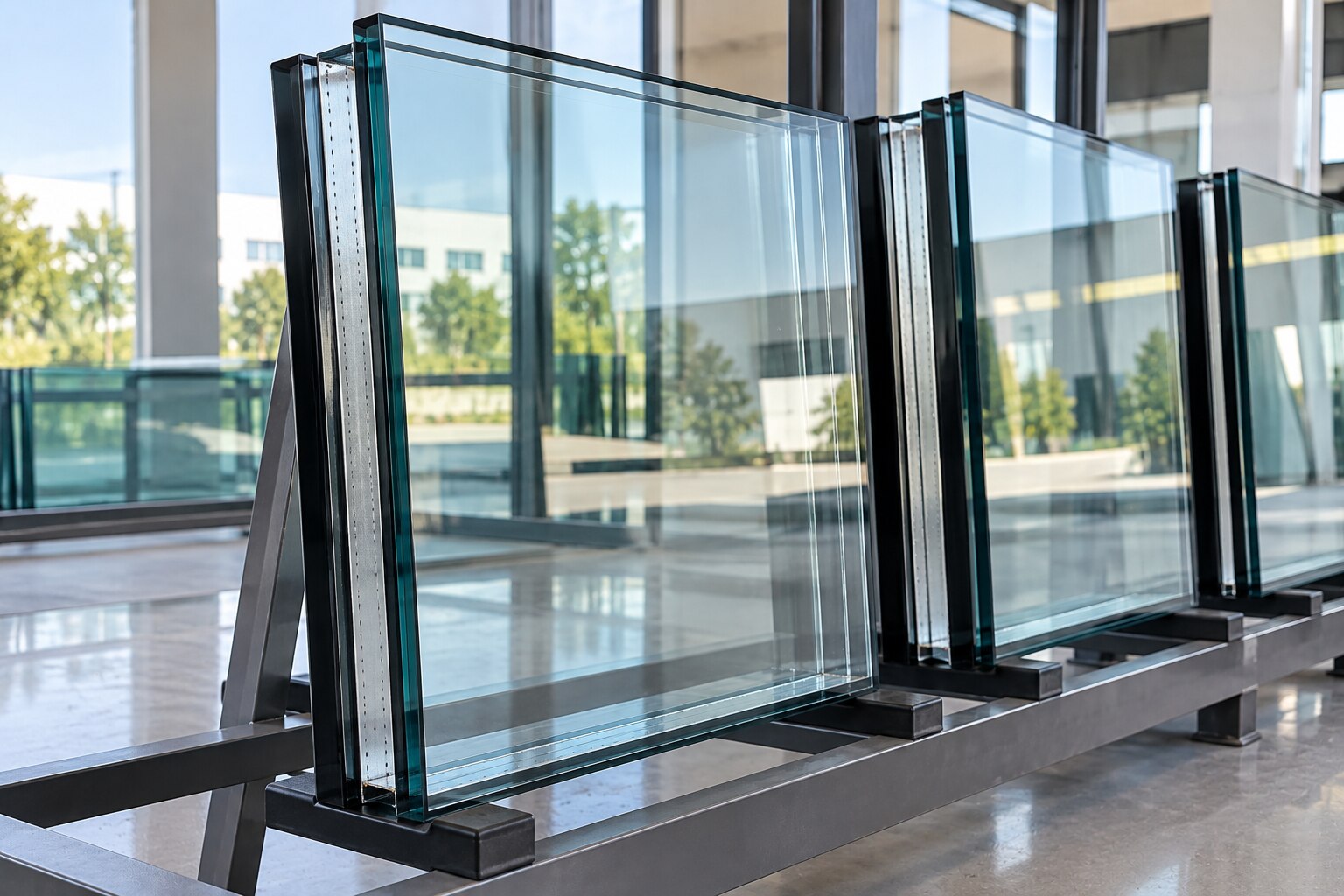
Factory-sealed DGU units survive transport and installation when their edge seals, orientation and support details remain undisturbed; assembling two loose panes at the site cannot provide the same controlled cavity, gas fill or clean sealing environment.
1. Move each unit upright on padded racks, with separators between panes. Protect corners and edges from impact, keep units strapped during transport, and never drag glass across a hard surface.
2. Store units under cover on a sloped or drained base. Standing water, construction dust and direct heat can contaminate the edge or accelerate seal damage. Chhattisgarh’s summer heat and solar exposure demand shade and airflow; Odisha’s monsoon humidity makes dry storage especially important.
3. Inspect the perimeter seal, corners, labels and glass surfaces before glazing. Reject a unit with a cut, gap, blister, exposed spacer or moisture inside the cavity. A contaminated glass edge prevents proper adhesion, while a damaged edge seal admits moisture and causes internal fogging.
4. Install the approved setting blocks at the specified positions and use compatible gaskets and sealants. A wrong block can load the spacer; a forced frame fit can bow the unit or break its seal. Follow the drawing’s drainage paths so water cannot sit against the perimeter.
5. Confirm pane orientation, especially for low-emissivity or solar-control coatings, before fixing beads. The wrong face changes heat and solar performance and can increase thermal stress.
For a project comparing a DGU glass manufacturer in Chhattisgarh with insulated glass production Orissa, assess documented gas and seal checks, delivery protection and installation coordination. Jivan Industries should be judged against those records and the approved drawing, not its quoted DGU label alone.
Related product
 | A double unit comprises of two panes of glass. These two panes of glass are held apart by a spacer bar. View product → |
Frequently asked questions
What happens at each stage of DGU glass manufacturing?
Manufacturing includes cutting and processing the panes, washing and inspecting them, preparing the spacer, assembling the cavity, applying primary and secondary seals, gas filling when specified, and completing final inspection.
How are the cavity, spacer and gas prepared?
The spacer defines the cavity width and carries the desiccant. Its corners and joints are sealed to prevent moisture entry, while the cavity is assembled clean and dry before inert-gas filling and final sealing.
How are pane combinations selected for a Chhattisgarh or Odisha project?
Select panes by required thermal control, solar control, safety, acoustic performance, structural loads, orientation and frame compatibility. Confirm the complete glass build-up rather than choosing thickness by appearance alone.
What should a DGU drawing and factory inspection report show?
The drawing should identify pane thicknesses, glass types, cavity width, spacer, gas specification, seal positions, dimensions and orientation. The inspection report should record dimensions, visual defects, edge condition, spacer joints, seals and gas-fill checks when applicable.
How do factory-sealed units survive transport and site installation?
Use suitable racks, edge protection and restraints during transport. Keep units upright, dry and supported, then inspect for seal damage, glass breakage and frame compatibility before installation.
Keywords