A ribbed glass surface can improve privacy and soften daylight, but the flutes alone do not make a window cooler. By the end, you will know when a fluted DGU can reduce heat and air-conditioning demand, which specifications control its performance, and when shading or another glass type is the better choice.
Key takeaways
- Fluted glass adds privacy and light diffusion, not automatic heat protection.
- The DGU cavity and glass coatings determine most hot-weather performance.
- Compare U-value, SHGC, visible transmittance and low-E coating data.
- Choose solar-control glass when reducing heat matters more than textured privacy.
What fluted glass adds to a double-glazed unit
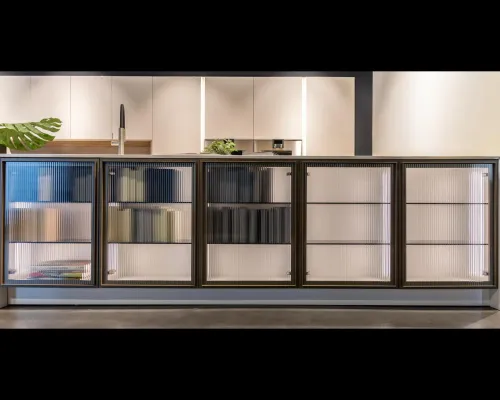
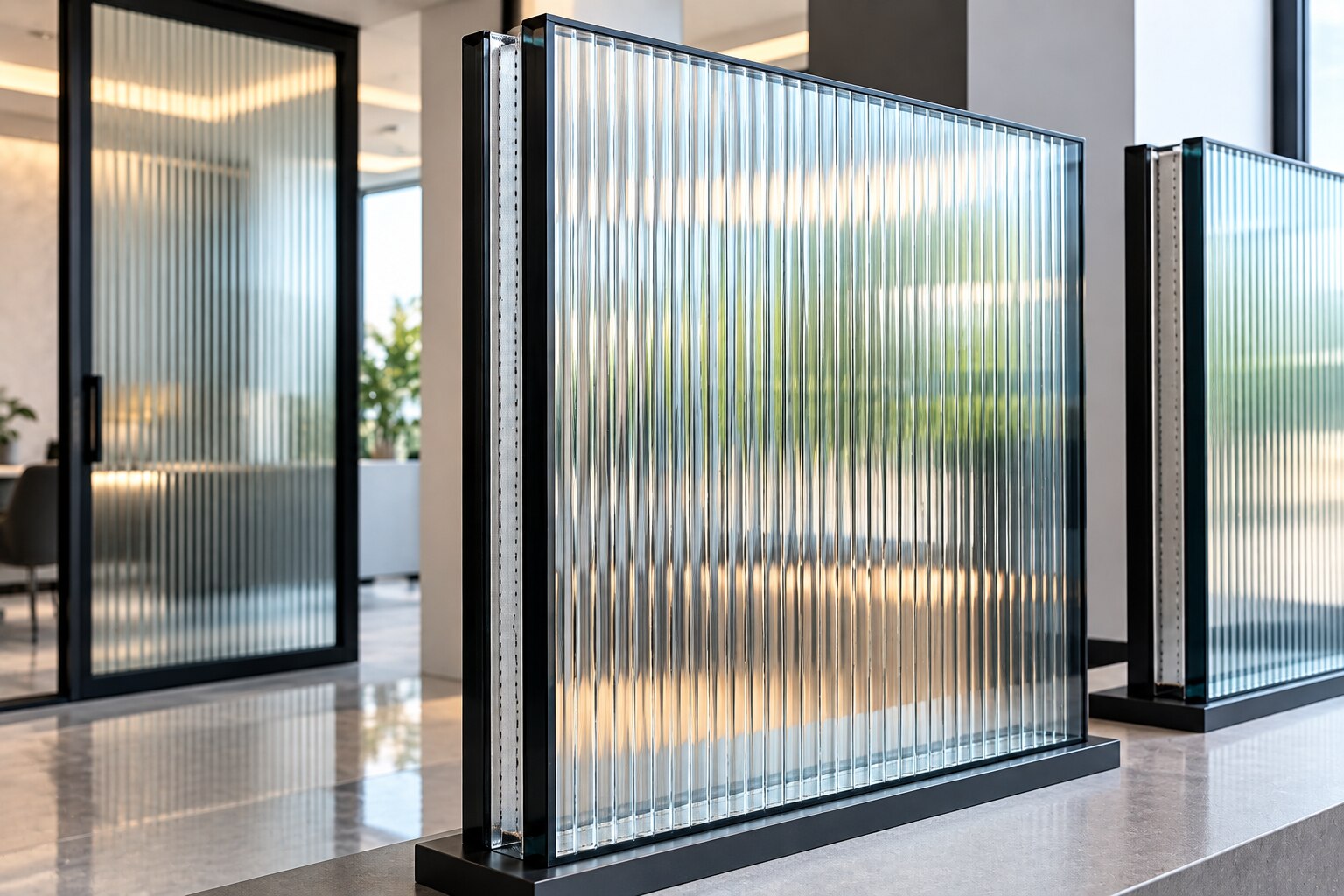
Fluted glass is a patterned pane with parallel ribs or grooves moulded into, or formed across, its surface. The ridges bend and scatter light, so daylight enters while direct views become blurred, stretched or visually distorted. This creates privacy without making the opening completely opaque.
In a fluted glass DGU, the fluted pane is sealed with another glass pane around a spacer, forming an insulating cavity filled with air or gas. The patterned pane can face the room or the exterior, depending on the desired texture, cleaning access and coating arrangement.
The sealed edge keeps the cavity stable; the ribs do not create the insulation themselves.
The main thermal benefit comes from the DGU construction and any specified low-emissivity or solar-control treatment. Separating the panes reduces conductive heat flow, while a suitable coating can reduce infrared transfer and solar heat gain. Clear fluted glass alone can still admit substantial sunlight.
That distinction matters when choosing fluted glass in Chhattisgarh. Its surface improves privacy and softens glare visually, but it does not automatically make a window cooler. For a fluted glass DGU, ask for the glass make-up, coating, cavity width and tested thermal values rather than accepting “fluted” as a performance specification.
Where the hot-weather benefit actually comes from
The useful cooling effect comes mainly from the insulated double-glazed unit, not from the flutes. A sealed cavity between two panes slows conductive heat flow, while a low-emissivity coating reduces infrared transfer and, when selected as a solar-control coating, limits the sun’s heat entering the room.
That is the key to dgu glass hot weather performance. The fluted pattern can diffuse daylight and soften views, but it does not automatically reduce solar heat gain. A fluted DGU with clear glass and no solar-control coating can admit more heat than a properly specified clear DGU.
For a west- or east-facing façade in Chhattisgarh or Odisha, low-angle morning or afternoon sun can drive glare and heat deep into rooms. External overhangs, fins or screens block that radiation before it reaches the glass; internal blinds reduce glare after heat has already entered.
Compare the complete window, not the label. Ask for:
- Whole-window U-factor, showing resistance to heat flow
- Solar heat-gain coefficient, or SHGC
- Visible transmittance, which indicates daylight levels
- Air-leakage rating, frame type and window-to-wall ratio
The practical meaning of “fluted glass dgu benefits hot weather orissa in chhattisgarh” depends on those figures, plus orientation, shading and HVAC assumptions. Check a façade mock-up before approval: flutes can create non-uniform reflections, optical distortion and unexpected privacy effects.
A DGU with a low SHGC and effective external shading keeps interior surfaces cooler and reduces air-conditioning demand.
Clear DGU, fluted DGU or solar-control glass?
For dgu glass hot weather performance, compare the whole window—not the pattern alone. A fluted glass dgu improves privacy and softens views, but clear fluting does not automatically reduce solar heat gain.
| Option | Main benefit | Hot-weather and view trade-off |
|---|---|---|
| Clear DGU | Insulation with maximum clarity | Good heat-flow reduction; solar gain remains high without low-e or solar-control coating |
| Fluted DGU | Privacy, daylight and diffused views | Similar insulation to its matching DGU; clear flutes are not solar control and can distort reflections |
| Tinted glass | Lower visible light and solar transmission | Reduces glare and heat, but changes colour and can make interiors darker |
| Reflective glass | Strong solar and glare control | Cuts heat gain and outward views; reflections and appearance require façade review |
| Laminated glass | Safety, acoustic control or solar-control interlayer | Performance depends on the interlayer; it does not replace an insulating cavity |
| Single fluted glass | Privacy with the lowest initial glass build-up | No DGU insulation, so the inner surface gets hotter and cooling demand remains higher |
Specify the target whole-window U-factor, solar heat-gain coefficient (SHGC), visible transmittance and air leakage. A low-SHGC coating plus external shading usually beats clear DGU on a sun-exposed façade.
Request a full-size mock-up before approval. Check optical distortion, reflected glare, colour, privacy and views at glass-to-glass corners; flutes become more noticeable across large panes.
Do not treat any option as safety glazing by default. Tempering or laminating must be specified separately for impact or fall-risk locations.
The specifications that decide real performance
Do not approve a quotation that says only “6-12-6 fluted DGU.” Request the complete build-up and the tested whole-window values for the exact frame, because glass-only figures can overstate real performance.
| Item | Request | Why it matters |
|---|---|---|
| Glass | Fluted pane position, pane thickness, low-e coating and coating surface; visible transmittance and SHGC | Fluting affects appearance, while low SHGC limits solar heat. A coating on surface 2 or 3 changes performance and colour. |
| Cavity | Nominal width, air or argon fill, fill percentage and warm-edge or aluminium spacer | Gas, cavity depth and spacer type alter heat flow. “12 mm gap” alone is not a thermal specification. |
| Frame | Aluminium, thermally broken aluminium, uPVC or other system; whole-window U-factor, SHGC and air leakage | The frame and perimeter seal can undermine good glass. Ask for values for the assembled window, not the centre pane. |
| Safety and sound | Toughened or laminated make-up, acoustic rating, sealant compatibility and warranty | Fluting is not an acoustic rating. Dissimilar pane thicknesses or acoustic laminate need laboratory data. |
For west and east façades, test low-angle sun, glare and external fins or overhangs in the project’s orientation. South façades depend on latitude and shading geometry; north façades still need a daylight and glare check. Include window-to-wall ratio and HVAC assumptions in the comparison.
Before approving fluted glass in chhattisgarh or a dgu glass orissa specification, inspect a full-size mock-up for distortion, reflected glare, privacy and colour. Jivan Industries can be asked to document these build-up and performance details rather than leaving “fluted DGU” as the entire specification.
Best uses, maintenance issues and clear reasons to choose another solution
Choose fluted DGU for office partitions, apartment bathrooms, stairwells, bedrooms and street-facing façades where privacy and softened daylight matter more than an unobstructed view. For fluted glass DGU benefits in hot weather, Orissa and Chhattisgarh, specify low-e or solar-control glass as well: the ribs do not block substantial solar radiation by themselves.
| Option | Best fit | Choose another solution when |
|---|---|---|
| Fluted DGU | Privacy, diffuse daylight and reduced direct views | You need clear views, accurate colour or easy cleaning |
| Clear low-e DGU | Daylight, outward visibility and insulated glazing | Glare or west-facing solar gain remains high |
| Solar-control DGU with external shading | Cooling performance on east and west façades | The design cannot tolerate reduced daylight or darker glass |
External overhangs, fins or shutters usually control direct sun better than changing a clear pane to fluted glass. Select using whole-window U-factor, SHGC, visible transmittance and air leakage, not the DGU label; test east and west elevations because low-angle sun causes glare and heat.
Inspect grooves before approval. Dust, mineral scale, insect matter and sealant residue collect on exposed ribs, while patterned glass can produce distortion and uneven reflections. Put the fluted face where maintenance access and drainage remain practical.
Choose clear dgu glass orissa projects when occupants need landscape views, maximum daylight or a clean sightline through glass-to-glass corners. Request a full-size mock-up before committing to large panes, especially beside doors, at corners or where reflected glare affects workstations.
Frequently asked questions
What does fluted glass add to a double-glazed unit?
It adds ribbed texture, diffused daylight and privacy by blurring or distorting views through the opening.
Where does a fluted DGU’s hot-weather benefit come from?
Heat reduction comes mainly from the double-glazed cavity, low-E or solar-control coatings, gas fill and correct installation—not the fluted pattern alone.
Is clear DGU, fluted DGU or solar-control glass best for hot weather?
Choose clear DGU for neutral views, fluted DGU for privacy and diffused light, or solar-control glass when limiting solar heat and glare is the priority.
Which specifications decide real DGU performance?
Check the centre-of-glass U-value, solar heat gain coefficient, visible transmittance, low-E coating, cavity width, gas fill, spacer and installation details.
Keywords