A mirror can crack, shed sharp fragments, pull away from its mount or deteriorate at the edges even when it is sold as a safety product. By examining the construction, room conditions, alternatives, installation details and maintenance requirements, you can choose a mirror assembly that manages the actual risks in your home rather than relying on the word “laminated.”
Key takeaways
- Laminated mirrors hold broken glass together after impact.
- Use them in bathrooms, hallways, bedrooms and areas near children.
- Confirm interlayer type, glass thickness, edges and backing before ordering.
- Use non-abrasive cleaner and inspect edges, chips and delamination regularly.
What makes laminated mirror glass different from a conventional mirror?
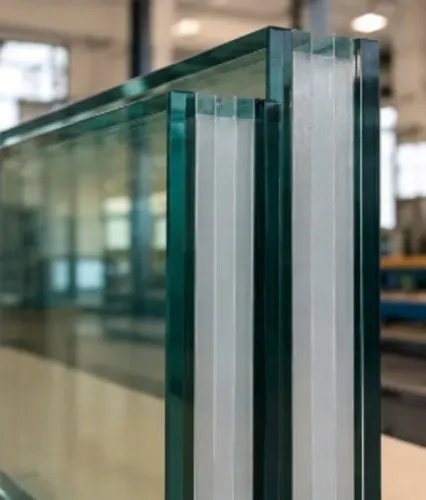
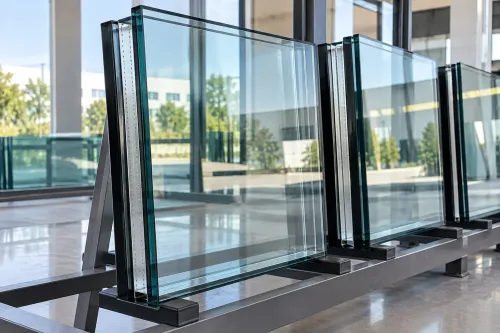
The difference is the construction behind the reflection. Laminated mirror glass bonds two or more glass plies around a plastic interlayer, while the reflective coating can sit on an internal glass surface between plies or on the rear surface of the laminate.
That position affects optical appearance, edge protection and moisture exposure: an internal coating is shielded by glass, whereas a rear coating depends more heavily on backing, sealed edges and dry detailing.
The main mirror laminated glass benefits appear after breakage:
- Cracks can leave many glass fragments attached to the interlayer instead of producing loose, falling or flying shards.
- The panel can still break under impact; retention does not make it unbreakable or automatically impact-certified.
- The heavy cracked panel still needs secure clips, channels, adhesive and wall support because lamination does not prevent detachment.
A conventional mirror is usually one annealed glass sheet with a reflective silver coating and protective paint on its back.
An adhesive safety film applied to that mirror is not the same as laminated mirror glass: it sits on a finished surface rather than bonding glass plies through an interlayer, so its retention, edge behaviour and test evidence depend on the specific film-and-mirror assembly.
Ask for the glass make-up and a test report for the finished construction. “Laminated mirror” alone does not prove forced-entry resistance, ballistic performance or compliance with a particular impact standard.
Where does mirror laminated glass provide the most useful protection at home?
The most useful locations are where a person could fall, collide with, or brush against a large mirror: wardrobes, bathroom mirrors, children’s rooms, home gyms, hallways, doors, partitions, stair areas and large wall panels.
Mirrors beside beds or along circulation routes also gain value from fragment retention because a cracked panel is less likely to release loose falling or flying shards.
Prioritise protection when the mirror sits low, lies in a fall path, covers a large unbroken area, or receives frequent human contact. A wardrobe door can be struck during dressing; a gym mirror can meet equipment or a falling person; a hallway mirror beside a door can be hit during daily movement.
In each case, the mirror laminated glass safety benefits for homeowners come mainly after breakage, not before it.
Use this room-by-room check:
- Wardrobes, doors and partitions: specify retention where people can walk into or fall against the panel.
- Bathrooms: protect mirrors near low-level fixtures and wet circulation routes, while controlling sharp corners.
- Children’s rooms and home gyms: favour retention where impact and repeated contact are foreseeable.
- Hallways, stair areas and bed-side routes: reduce loose-shard risk along likely fall paths.
- Large wall panels: treat size and weight as hazards; a detached panel can still cause serious injury.
Lamination does not prevent slips, impacts, sharp corners, insecure frames, wall failure or a detached mirror. It proves neither forced-entry resistance nor ballistic performance.
Check the adopted local building code for hazardous-location safety glazing, then request evidence for the finished assembly, such as ANSI Z97.1 or CPSC 16 CFR Part 1201, rather than accepting “laminated” without documentation.
How does laminated mirror glass compare with other residential mirror choices?
A laminated mirror glass safety benefit is retained breakage, not immunity from impact. The interlayer holds many fragments together after cracking, while the reflective coating’s position, tint, backing and edge sealing affect appearance and durability.
| Option | Breakage and safety | Optical and practical trade-offs |
|---|---|---|
| Ordinary silvered annealed mirror | Breaks into sharp, loose shards with little retention. | Usually clear and inexpensive, but exposed edges and rear coating are vulnerable to moisture; clean gently. Lightest glass option, with simpler replacement. |
| Laminated mirror glass | The interlayer retains fragments, reducing falling or flying shards. | Excellent flatness when correctly made, but thicker and heavier. Seams, tint and interlayer colour can be visible across large areas; edges need sealing, and moisture or incompatible cleaners can cause haze or delamination. |
| Toughened mirror | Breaks into smaller pieces, but does not provide the same retained-fragment behaviour. | Good optical quality, yet the mirror can fail across its whole panel; edge damage remains critical. Replacement requires removing all fragments and checking the mounts. |
| Acrylic mirror | Does not shatter like glass and greatly reduces weight. | Scratches, bends and distorts more easily, especially across large areas; cleaning needs a soft cloth and compatible cleaner. Its edges and surface mark readily. |
| Toughened glass with surface film | The film sits on the surface; it is not a laminated construction with an interlayer between glass plies. | Film adhesion, edge lift and cleaning damage control performance. Do not assume it equals tested laminated mirror glass safety. |
Choose another specification for very low-weight, flexible-impact, high-heat or outdoor-weathering applications, or where frequent replacement matters. A rigid laminate is also a poor fit when seams or large-area distortion cannot be accepted.
How should you install, clean and inspect a laminated mirror?
1. Before fabrication, confirm the glass thickness, interlayer type and thickness, maximum panel size, mirror-coating position, backing, edge finish, compatible sealant, wet-area suitability and intended mounting method. Specify every hole, cut-out and polished or arrissed edge in advance; field drilling after lamination can damage the interlayer and create a weak, unsealed opening.
2. Treat the mounting system as part of the safety design for mirror glass for residential spaces. Anchor clips, channels or brackets into a suitable substrate, distribute loads, avoid point loading, protect exposed edges and use only a compatible adhesive.
Inadequate anchoring can release a heavy panel, and a cracked retained panel can still overload clips or pull out of the wall.
3. Clean with a soft, non-abrasive cloth and a mild product approved for the mirror assembly. Do not use abrasive pads, razor blades or ammonia-heavy cleaners, and do not let liquid pool at the edges; water, aggressive chemicals and unsealed holes can cause black-edge corrosion, discoloration or bond loss.
4. Inspect the face, edges and mounts regularly for black-edge corrosion, haze, delamination, scratches, loose clips, movement or adhesive failure. Stop using the area and isolate the panel if it shifts, loses its bond or shows structural cracking; do not press, re-drill or improvise a repair.
A glazier should assess replacement and the supporting wall before reuse.
What should a homeowner verify before ordering laminated mirror glass?
Treat “laminated mirror” as an incomplete specification. For laminated glass for homeowners, a comparable quotation must identify the finished assembly, its tested limits and who is responsible for fitting it.
- Ask for the complete make-up, nominal thickness, interlayer type and thickness, mirror-coating location, edge treatment, backing and exact dimensions.
- Confirm the maximum panel size, mounting hardware, wet-area sealant system and installation responsibility.
- Request the exact impact standard, such as ANSI Z97.1 or CPSC 16 CFR Part 1201, plus the test report and product documentation for the finished construction—not only one glass ply.
| Quotation item | Verify | Why it matters |
|---|---|---|
| Make-up and size | Glass, interlayer, coating position, thickness and panel limits | Changes weight, appearance and tested performance |
| Edges and support | Edge finish, backing, mounts and sealant | Prevents moisture damage, point loading and detachment |
| Safety evidence | Standard, report, product records and batch details | “Laminated” alone does not prove impact certification |
On delivery, compare the panel with the order: check dimensions, thickness, edge finish, mirror uniformity, visible defects, batch or product records, packaging and mounting hardware. Photograph damage before accepting it.
Budget for greater weight than acrylic, specialist handling, longer fabrication or installation, protected edges and more complex replacement. A supplier such as Jivan Industries is worth considering only when it documents the specified assembly rather than treating “laminated mirror” as a complete quotation.
Related product
 | Laminated Glass is a safety and security glass that is made by sandwiching a laminated sheet between two pieces of glass. View product → |
Frequently asked questions
What makes laminated mirror glass different from a conventional mirror?
Laminated mirror glass bonds two or more glass plies around a plastic interlayer. After breakage, the interlayer helps retain fragments instead of leaving loose shards. The reflective coating sits on an internal glass surface or the rear surface of the laminate.
Where does mirror laminated glass provide the most useful protection at home?
It is useful in bathrooms, hallways, bedrooms, stair areas and rooms used by children, particularly where a mirror sits near doors, furniture or impact-prone circulation paths.
How does laminated mirror glass compare with other residential mirror choices?
A conventional backed mirror usually has one glass sheet, while laminated mirror glass adds a retaining interlayer. Tempered mirror glass breaks into smaller pieces but does not provide the same bonded-fragment retention. Compare safety performance, thickness, weight, edge finish and installation requirements.
How should you install, clean and inspect a laminated mirror?
Use a qualified installer, compatible mirror adhesive or mechanical fixings, and support the glass as specified for its size and weight. Clean with a soft cloth and non-abrasive glass cleaner, keeping moisture away from exposed edges. Inspect for chips, loose fixings, edge damage, bubbles or separation between plies.
What should a homeowner verify before ordering laminated mirror glass?
Confirm the glass thickness, laminate construction, reflective-coating position, dimensions, polished edges, backing, intended fixing method and suitability for the installation location. Ask for product documentation that identifies the construction and handling requirements.
Keywords