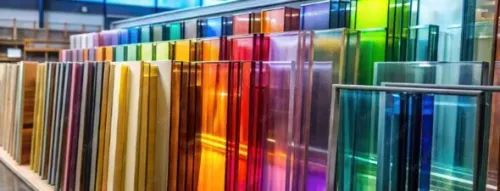
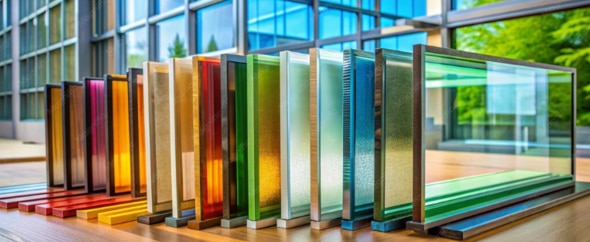
Colored laminated glass combines a visual finish with post-breakage fragment retention, but its appearance and performance depend on far more than a color name. By the end, you will know how the color is created, where this glass fits, which specifications matter, and when another glazing option is the better choice.
Key takeaways
- The color usually comes from a PVB or ionoplast interlayer, not the glass ply.
- Lamination holds broken glass together after impact but does not make it unbreakable.
- Choose color by visible light transmission, solar control, privacy needs and edge appearance.
- Specify glass plies, interlayer type, color, thickness, heat treatment and compliance documents.
How Colored Laminated Glass Is Made and What Happens on Impact
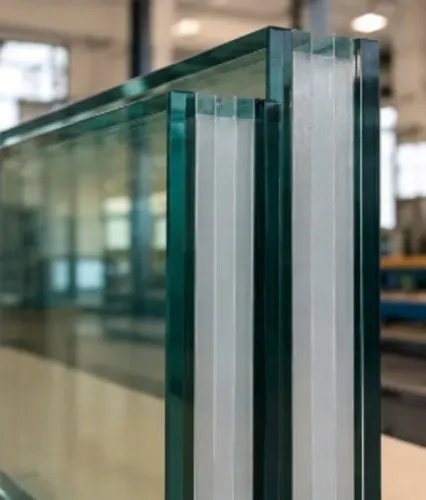
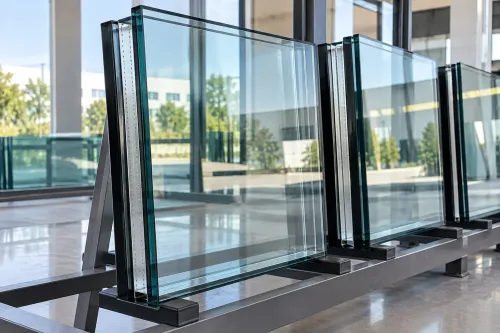
Colored laminated glass is a safety-glazing assembly made from two or more glass plies bonded by a polymer interlayer. The color often sits in that layer—commonly PVB, ionoplast, or another specialty interlayer—rather than in the glass. Fabricators heat-treat the plies before lamination; once bonded, the assembly cannot be conventionally cut, drilled, or edge-machined.
The color can come from:
- A tinted PVB or other polymer interlayer
- Colored glass
- A ceramic coating
- A combination of these
A dark or strongly absorbing interlayer can raise glass temperature and thermal stress, so color is not a substitute for energy analysis. Check the manufacturer’s solar-control data for the exact make-up. Poorly protected edges let moisture into the laminate and can trigger delamination.
On impact, the plies crack, but the interlayer grips fragments and helps retain them in the frame. This limits falling shards and keeps the opening partly closed; it does not make the glazing impact-proof. Toughened glass instead breaks into small particles, while fully tempered laminated glass generally resists impact better than annealed laminated glass.
Where Colored Laminated Glass Is Used and What Each Color Does
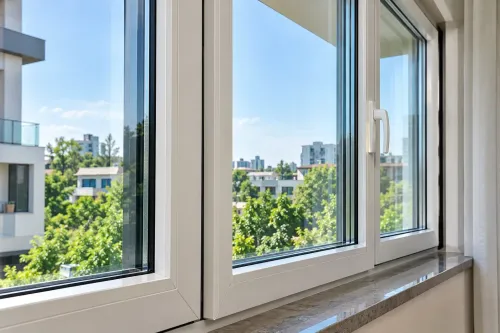
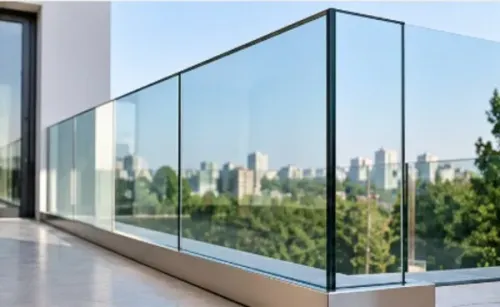
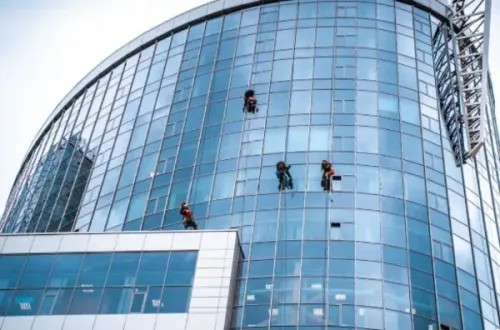
Colored laminated glass is used in real buildings where a surface needs color, controlled light, privacy, branding, or retained fragments after breakage. Common colored laminated glass applications include façades, curtain-wall infill, skylights, canopies, balustrades, stair screens, doors, partitions, shopfronts, privacy screens and feature walls.
- Blue and green reduce visual brightness and create a cool architectural appearance; they suit façades, atriums and public interiors.
- Grey and bronze provide a subdued, tinted look while reducing visible light and glare. Confirm the exact visible-transmittance value before using them near workspaces.
- White, opal and translucent interlayers diffuse views and light, making them useful for privacy partitions, bathroom screens and backlit feature walls.
- Black and dark colours create strong contrast for entrances, stair panels, branded interiors and feature walls. Dark laminates absorb more solar energy, so check solar-factor and thermal-stress data.
- Red, yellow and other saturated colours support wayfinding, identity and decorative schemes. They do not automatically provide privacy or solar control.
The safety function remains important in every location: after impact, cracked glass stays attached to the interlayer instead of falling as loose shards. That does not make a panel impact-proof.
For a canopy, skylight or other overhead installation, approve the complete assembly, including glass thickness, heat treatment, interlayer, supports, drainage and edge protection; a vertical build-up may be unsuitable overhead.
How Architects Should Choose Color, Light and Edge Appearance
Approve a physical sample or project mock-up, not a catalogue swatch, before you freeze colored glass for architects. Check it in daylight and interior lighting, from intended viewing angles, beside actual substrates, and across the full pane area. Record visible-light transmission and solar heat gain; a color name predicts neither.
- Specify each glass ply as annealed, heat-strengthened or fully tempered. Heat treatment must occur before lamination, because the finished assembly cannot be conventionally cut, drilled or edge-machined.
- Name the interlayer chemistry, color, thickness and manufacturer. Compare clear, low-iron, tinted and coated glass combinations because the same interlayer changes appearance and performance in each.
- Set tolerances for color, visible-light transmission, solar heat gain, haze and visual defects. Require the intended safety classification, such as the project’s specified impact standard, with test reports.
- Detail polished, arrissed or seamed edges, and identify every exposed edge. Require edge deletion or an approved protective detail when the façade system leaves the laminate vulnerable to moisture.
- Confirm pane dimensions, fabrication limits, setting-block compatibility, sealant compatibility and mock-up approval before release.
| Combination | Appearance and light result | Approval point |
|---|---|---|
| Clear glass plus colored PVB | Stronger interlayer color and higher light transmission | Check glare and saturation |
| Low-iron glass plus colored PVB | Cleaner, brighter color with less green cast | Approve against the actual substrate |
| Tinted or coated glass plus colored PVB | Darker appearance and altered solar performance | Obtain measured transmission and solar data |
| Ceramic frit plus colored interlayer | Patterned opacity and reduced transparency | Inspect viewed from both sides |
How It Compares With Other Glass Options—and Where It Falls Short
Colored laminated glass is the better choice when a project needs a defined visual effect and glass fragments retained after breakage. That combination suits colored laminated glass applications including:
- Balustrades, stair panels and canopies
- Façades, skylights and overhead glazing
- Partitions, doors, shopfronts and privacy screens
- Feature walls and branded interior elements
| Option | Better choice when | Where colored laminated glass falls short |
|---|---|---|
| Clear laminated glass | You need safety retention without changing daylight or colour | It cannot provide the same coloured privacy, branding or visual screening |
| Tinted glass | You need basic solar or glare reduction at lower complexity | Tint alone does not retain cracked fragments, and colour matching can vary by glass thickness |
| Fully toughened glass | You prioritise high impact resistance and small, blunt breakage particles | It breaks into loose pieces and does not retain a cracked pane in the frame |
| Painted or ceramic-coated glass | You need an opaque, uniform back colour or graphic surface | Coating damage, edge exposure and surface orientation require control; it is not a substitute for laminated safety glazing |
| Insulated glass | Thermal insulation and condensation control are the main goals | A coloured laminate does not create an insulating cavity; use it as one pane within a tested insulating-glass unit |
Color does not improve acoustic performance by itself. Acoustic insulation depends on pane thickness, interlayer type, cavity width, framing and seals, so request laboratory data for the complete assembly. A coloured laminate also cannot be conventionally cut or drilled after manufacture.
How to Specify and Source Colored Safety Glass for a Project
A purchase request should define the complete make-up, not merely state “blue laminated glass.” Include:
1. Intended use, pane dimensions, quantity, shape, thickness, and whether the glass will be monolithic, part of a DGU, or installed in a frame.
2. Glass type and treatment: annealed, heat-strengthened, or fully tempered; specify that heat treatment must occur before lamination.
3. Interlayer chemistry, thickness, and exact color, such as standard PVB, acoustic PVB, ionoplast, or another specified polymer. Approve a full-size sample for shade, haze, edge color, and visible defects.
4. Edge finish, polished or arrissed edges, holes and notches, and whether an exposed edge needs moisture protection. Laminated glass cannot be conventionally cut or drilled after manufacture.
5. Required safety classification and the project standard, such as ASTM C1172, ASTM C1048, ANSI Z97.1, EN 14449, EN 12600, or the applicable Indian building-code provision. Ask for reports identifying the tested make-up, not a generic certificate.
6. Optical and energy data: visible transmittance, solar factor or g-value, shading coefficient, and acceptable color tolerance. Dark interlayers can raise glass temperature and thermal stress, so check orientation, frames, and shading.
Evaluate a colored safety glass supplier Odisha projects can rely on by checking sample approval, traceable batch records, fabrication capacity, packaging, delivery dates, and replacement terms. Ask Jivan Industries to confirm acoustic results for the specified assembly rather than treating color as proof of sound insulation.
Related product
 | Laminated Glass is a safety and security glass that is made by sandwiching a laminated sheet between two pieces of glass. View product → |
Frequently asked questions
What is colored laminated glass used for?
It is used for facades, entrance doors, balustrades, partitions, skylights, canopies, privacy screens and decorative architectural features where safety retention and color are required.
How does colored laminated glass behave when it breaks?
The glass plies can crack on impact, but the polymer interlayer holds many fragments together. The assembly still requires replacement after damage and is not impact-proof.
How should architects choose a color for laminated glass?
Compare visible light transmission, glare, solar heat control, privacy, surrounding materials and the intended appearance of the exposed edge. Review physical samples in the actual light conditions.
How does colored laminated glass compare with toughened or monolithic glass?
Laminated glass retains cracked fragments and supports safety and acoustic functions, while toughened glass offers high strength but breaks into smaller pieces. Laminated glass costs more, weighs more and needs careful fabrication.
What should a project specification include for colored safety glass?
State the glass ply composition, thickness, heat-treatment condition, interlayer material and color, dimensions, edge finish, performance requirements, applicable test standards, fabrication limits and required compliance documents.
Keywords