Choosing a DGU supplier involves more than comparing glass thickness or asking whether argon is available. You need to match the unit to the façade, frame and safety condition, then verify performance, fabrication limits, delivery capability and installation evidence before issuing a purchase order.
Key takeaways
- Specify U-value, SHGC, cavity width, glass make-up and spacer type.
- Check DGU edge clearances, drainage paths and frame compatibility before ordering.
- Request test reports, drawings, warranties and delivery records from suppliers.
- Use project-specific glazing schedules for windows, curtain walls, skylights and shopfronts.
Where DGU glazing belongs in an architectural design
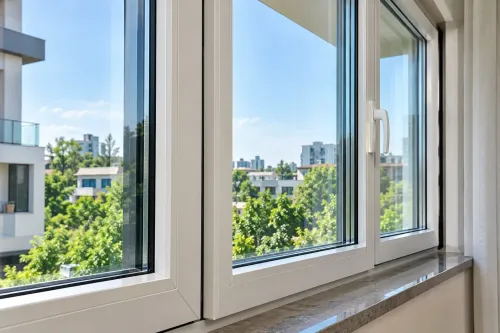
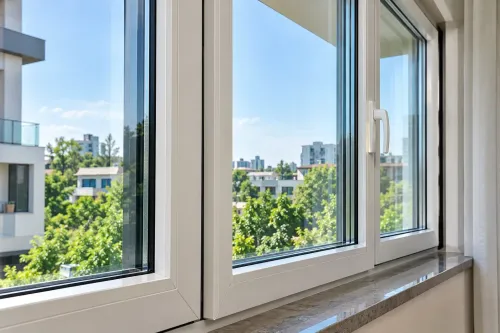
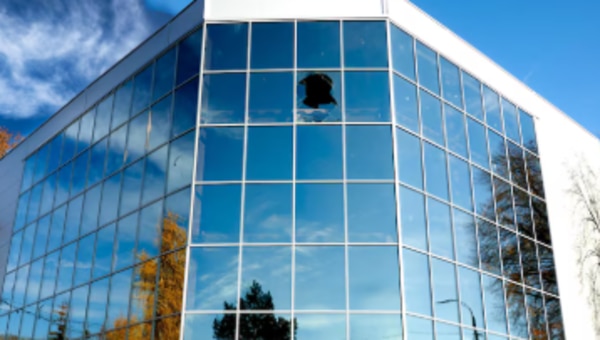
DGU glazing for architects belongs in punched windows, curtain walls, shopfronts, skylights and façade modules where a sealed cavity improves thermal performance.
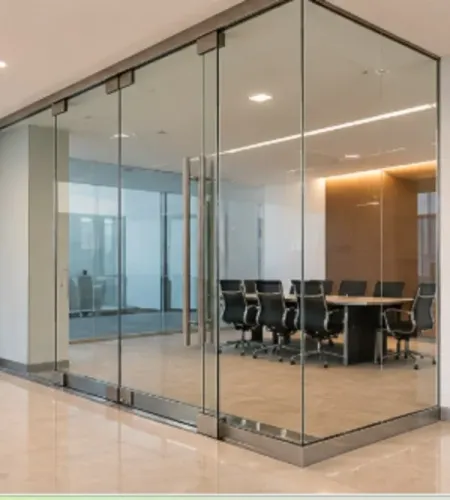
It also suits selected internal partitions when temperature control or sound reduction matters, but a site-created gap between two separately installed panes is not an insulating glass unit: it lacks the factory-controlled spacer, desiccant, edge seals and gas retention.
| Option | Suitable decision | Add or choose instead |
|---|---|---|
| Standard DGU | Windows and façade modules without impact or fire exposure | Confirm thermal-stress suitability |
| Safety-glass DGU | Shopfronts, low-level glazing and entrance screens | State toughened or laminated classification pane by pane |
| Laminated acoustic build-up | Noise-sensitive façades or partitions | Specify acoustic interlayer and measured rating |
| Single pane | Unconditioned, lightly exposed or weight-limited locations | Check condensation and energy consequences |
| Fire-rated system | Fire compartments, protected escape routes and rated doors | Use a tested specialist assembly |
“Double glazed” does not mean “safety glazed.” Doors, entrance screens, glazing beside doors and glass below the project’s impact-height threshold may require fully tempered or laminated safety glass under IS 2553; identify the classification for each pane, not only the complete DGU.
DGU cannot replace external solar shading, ventilation or a fire-rated assembly. East and west façades still need shading analysis, while condensation depends on indoor humidity, outdoor temperature, ventilation and the complete frame-edge-glass system.
For hot Chhattisgarh and humid, monsoon-exposed Odisha, require thermal-stress review for pane size, orientation, shading, frits, films and adjacent opaque panels. Use a safety-glass DGU for impact zones, a laminated acoustic build-up for noise, a single pane where insulation is unnecessary, and a specialist fire-rated system where tested fire performance is required.
How to compare DGU pane combinations and performance figures
Compare the complete build-up, not the label “DGU”. Request centre-of-glass U-value and whole-window U-value in W/m²·K, SHGC or g-value, visible light transmittance, acoustic rating in dB or Rw/STC, pane thickness, overall unit thickness and maximum panel dimensions.
| Combination | Main advantage | Check before selection |
|---|---|---|
| 6-12-6 clear air | Baseline daylight and insulation | Centre U-value is about 2.7–2.9 W/m²·K |
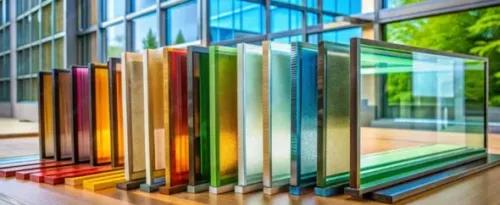
| Tinted or low-E | Reduces solar or long-wave heat transfer | Confirm SHGC, VLT, colour and coating surface |
| Toughened or heat-strengthened | Higher thermal and impact resistance | Check roller-wave distortion and thermal stress |
| Laminated acoustic | Retains fragments and can improve sound control | Require acoustic-laminate data for the complete window |
A similar low-E argon unit may show a centre U-value of approximately 1.1–1.5 W/m²·K, but neither figure represents the complete window. Frame, spacer and edge effects can materially worsen whole-window performance.
For Chhattisgarh and Odisha, do not chase U-value alone. East and west façades need solar-control review, SHGC selection and external shading because low-E insulation does not automatically block direct sun.
Specify which pane is external, where the coating sits, and whether the panes are asymmetrical. Put the thicker or laminated pane where safety, acoustics or impact exposure demands it; confirm the frame and cavity can carry the weight.
Ask the supplier to check thermal stress for the exact size, aspect ratio, orientation, frits, films and adjacent opaque areas. For a dgu glass supplier odisha in chhattisgarh, request laboratory Rw/STC data because an acoustic laminate, frame, seals and flanking paths—not the glass label alone—determine the result.
What to put on the DGU drawing and glazing schedule
Write each DGU as a unit code, then define the complete build-up beside it. A double glazing unit supplier in chhattisgarh cannot price accurately from “6-12-6 low-E” alone.
- Outer pane: glass type, thickness, colour, safety class and coating surface.
- Cavity: width, air or argon fill, manufacturing gas concentration and tolerance.
- Inner pane: glass type, thickness, colour and safety class—toughened, heat-strengthened or laminated.
- Edge system: spacer material and width, desiccant, primary sealant, secondary sealant and edge deletion.
- Dimensions: width, height, overall thickness, unit weight, maximum size, squareness, bow and seal-offset tolerances.
Set numerical project tolerances for dimensions and thickness; reject “standard tolerance” without a stated value.
| Spacer | Thermal behaviour | Coordination consequence |
|---|---|---|
| Aluminium | Creates a stronger edge thermal bridge | Lower edge performance; easier availability |
| Warm-edge | Reduces edge heat flow and condensation risk | Confirm frame rebate, sealant and system compatibility |
Do not select a wider cavity automatically. Beyond the useful range, convection can increase, while deeper rebates, greater weight and harder handling offset the insulation gain.
Your submittal checklist should request argon availability, gas concentration at manufacture, gas-retention or seal-integrity evidence, desiccant specification, coating data, visible samples, maximum size, unit weight, corner-joint details and warranty conditions. Require evidence that the quoted build-up—not a similar brochure configuration—has been tested or is covered by the warranty.
Insist on a project-specific sample or mock-up before approval.
How DGU units must interface with frames and façade systems
A DGU fits only when the frame and façade system are designed around its actual dimensions, weight and edge-seal requirements. Aluminium, uPVC, steel and structural-glazing systems each need confirmed rebate depth, glass bite, edge clearance, setting-block position and drainage detail.
1. Confirm the frame interface before ordering. Place setting blocks at the locations shown by the system designer, with hardness and width suitable for the unit weight; do not support glass on metal or point-load the spacer. Keep drainage paths and pressure-equalisation holes open, and provide continuous weather seals.
2. Check every material touching the DGU edge. Confirm gasket compatibility and sealant adhesion with the primary and secondary edge seals, including silicone used in structural glazing. Contaminated sealant, damaged edges, standing water and blocked drainage can produce fogging or premature seal failure. Store units away from direct heat.
3. Use factory-sealed DGU rather than creating a loose cavity on site. Factory assembly controls spacer alignment, desiccant loading, gas retention and edge-seal geometry; two separately installed panes cannot reproduce those conditions. Never cut or resize a finished DGU as a site repair.
4. Require a representative façade mock-up before production. Test air and water penetration, review thermal stress, and assess condensation at the glass centre, frame and edge. Coordinate the glass, frame and façade subcontractors before fabrication, including tolerances, maximum transport dimensions, unit weight and unloading access.
How to vet a DGU supplier for project delivery in both states
Treat “available” as unproven until the supplier maps one specified unit from factory to site. A search for “dgu glass glazing supplier for odisha in chhattisgarh” does not confirm production capacity, transport control or replacement support.
1. Ask for the manufacturing location, confirmed production lead time, transport route, maximum unit size and unit weight. Require the unloading method, vehicle access assumptions, site-storage limits and a written process for photographing, recording and reporting transport breakage.
2. Test “dgu glass availability odisha” against the actual schedule. Separate immediate stock from made-to-order production; custom dimensions, low-E coatings, argon filling and laminated panes rarely behave like shelf stock. Ask which approved make-ups are ready to dispatch and which require new production.
3. Require a project-specific submittal identifying every unit, complete pane make-up, coating position, cavity width, air or argon specification, gas concentration, spacer, desiccant, primary and secondary sealant, dimensional tolerances, test evidence, visible sample or mock-up requirements, warranty exclusions and replacement lead time.
4. Confirm compatibility with the nominated façade system before placing the order. Check glass bite, rebate depth, setting blocks, drainage, sealant compatibility, transport dimensions and installation support with the frame and façade contractors.
Score each bidder for technical compliance, delivery control, replacement response and installation support—not quoted glass price alone. Jivan Industries belongs in that comparison only after it supplies this evidence and confirms the specified DGU can be manufactured, transported and installed without changing the façade design.
Related product
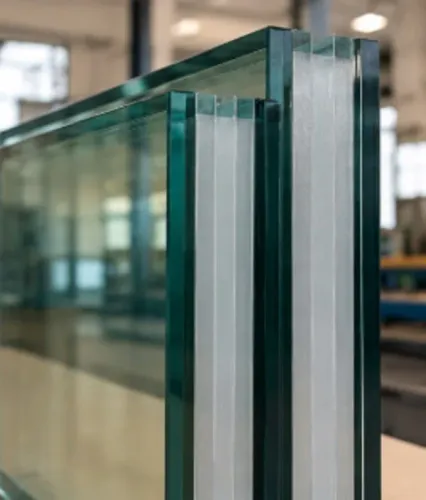
 | A double unit comprises of two panes of glass. These two panes of glass are held apart by a spacer bar. View product → |
Frequently asked questions
Where does DGU glazing belong in an architectural design?
DGU glazing suits punched windows, curtain walls, shopfronts, skylights and façade modules where a sealed cavity improves thermal performance.
How should architects compare DGU pane combinations?
Compare the complete unit’s U-value, solar heat gain coefficient, visible light transmission, cavity width, glass thickness, coating position and spacer type.
What belongs on a DGU drawing and glazing schedule?
Record pane make-up, cavity gas, cavity width, coatings, dimensions, edge clearances, spacer, sealants, tolerances, safety-glass requirements and performance figures.
How must DGU units interface with frames and façade systems?
Coordinate unit thickness, rebates, setting blocks, drainage, weep holes, gaskets, sealants, movement allowances and edge clearances with the frame system.
How can you vet a DGU supplier for projects in Chhattisgarh and Odisha?
Check production capacity, quality-control records, test reports, delivery planning, packaging, replacement procedures, installation support and experience with the specified façade system.