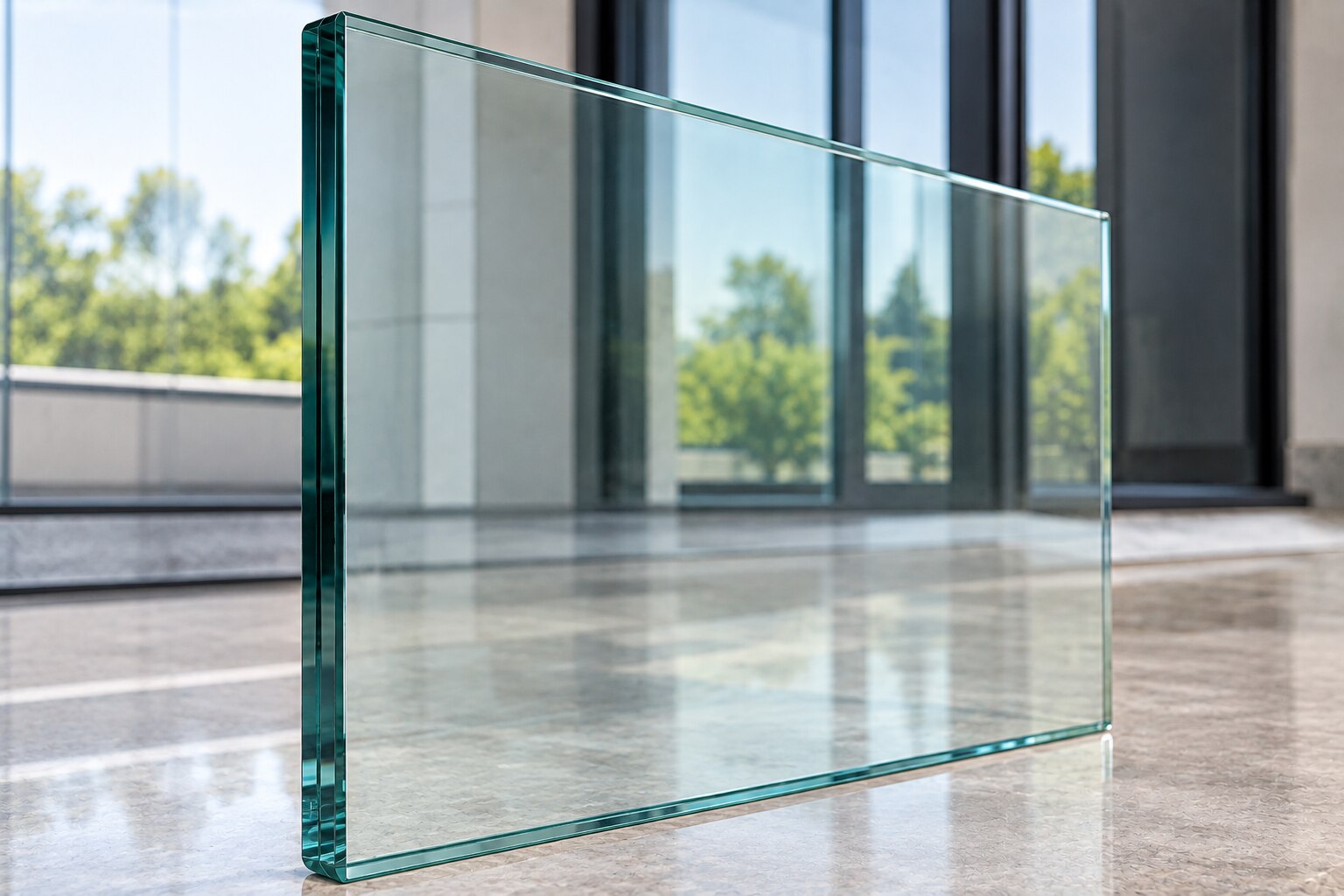
Heat-soaked glass is already cut, drilled, edge-finished and thermally toughened before it enters a second furnace for destructive quality control. By following the production sequence, test conditions and delivery records, you can tell whether a pane was genuinely heat soaked and what that process does—and does not—prove about its safety.
Key takeaways
- Finish every cut, hole and edge before tempering.
- Ask for heat-soak test records and rejected-pane details.
- Check pane markings, dimensions, edges and damage before acceptance.
- Heat soaking tests nickel sulfide inclusions; it does not guarantee zero breakage.
What heat-soaked glass is—and when it is made
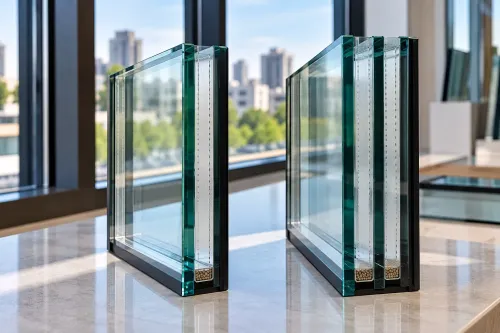
Heat-soaked glass is thermally toughened glass that has completed an additional heat-soak test. Ordinary toughened glass leaves the tempering line after rapid quenching and inspection; heat-soaked glass enters a separate controlled furnace to expose panes containing nickel sulfide inclusions that could break later without warning.
| Glass type | What happens | Result |
|---|---|---|
| Ordinary toughened glass | Heated uniformly, rapidly quenched and inspected | Strong safety glass that can still contain a latent nickel sulfide failure |
| Heat-soaked glass | Finished toughened glass is tested at approximately 290 °C under EN 14179-1 | Panes likely to fail are rejected inside the chamber before delivery |
The manufacturing order matters: inspect the stock, cut it to final dimensions, finish edges, drill holes or make notches, wash it, heat it in the tempering furnace, quench it rapidly, inspect it, and then heat-soak it when specified. Cutting or drilling after tempering destroys the pane’s stress profile and is not a corrective fabrication step.
If you are researching how heat soaked glass is made in Orissa or in Chhattisgarh, the state does not change this recipe. Ask instead for the declared standard, furnace temperature records, pane identification, breakage record and inspection results.
Heat soaking reduces the risk of a nickel-sulfide-related break; it does not protect against forced fitting, damaged edges, metal contact, unsuitable setting blocks or thermal stress after installation.
Why every cut, hole and edge is finished before tempering
Every permanent fabrication operation must be finished before the pane enters the toughening furnace. After tempering, cutting, drilling or notching disrupts the stress profile and usually causes the pane to shatter instead of accepting the modification.
- Cut the glass to its final length and width.
- Grind or polish every exposed edge, including arrises and corners.
- Drill holes, slots and cut-outs to the approved drawing.
- Complete countersinks, notches and hinge or handle recesses.
- Wash the finished pane so glass dust, oil and fingerprints do not mark the furnace or become permanent defects.
Edge quality controls whether the pane survives heating and rapid quenching. A chip, sharp corner or grinding crack concentrates stress; the defect can trigger breakage in the furnace or during later handling. Ask for edge inspection against the agreed edge finish, not simply a statement that the glass was “processed.”
Optical inspection catches defects that strength certificates do not describe.
| Check | Why it matters | What to look for |
|---|---|---|
| Edge inspection | Finds breakage initiators | Chips, shelling, cracks and uneven grinding |
| Surface inspection | Identifies visible manufacturing defects | Scratches, stains, coating damage and inclusions |
| Optical inspection | Reveals appearance problems after tempering | Roller-wave distortion, local distortion and anisotropy in reflected views |
Large façades, dark coatings and reflected skies make optical distortion easier to see. Specify the visual-quality class and inspection conditions before ordering; a tempering certificate alone does not define appearance. This applies equally to toughened glass manufacturing Orissa and production elsewhere.
From washing to quenching: how a toughened pane is formed
After fabrication, the pane is washed to remove glass dust, cutting oil and fingerprints. Any residue can mark the surface or interfere with inspection inside the tempering line.
1. The operator confirms the pane’s identity, dimensions and orientation, then loads it onto ceramic rollers. Cutting, edge grinding, polishing, drilling and notching must already be complete; tempering makes later alteration impossible without destroying the stress profile.
2. The pane moves through a tempering furnace, where electric heaters bring the soda-lime glass to roughly 620–680°C. The exact setpoint depends on thickness, coating and line design, so the production record must link the settings to the pane or batch.
3. At the furnace exit, high-volume air jets cool both faces rapidly. This quench freezes the outer surfaces in compression while the interior remains in tension, creating the strength and break pattern expected from thermally toughened glass.
4. The cooled pane is inspected for scratches, edge damage, roller distortion, optical defects and visible breakage. Operators also confirm dimensions, markings and the required fragmentation result under the applicable toughened-glass product standard.
5. Accepted panes are identified and separated for heat-soak testing. That operation uses a different, controlled chamber to reheat the already toughened glass; it is not another pass through the tempering furnace.
A pane that survives tempering is therefore not yet ready for dispatch as heat-soaked glass. It first needs traceable loading, a recorded heat-soak cycle and inspection after that separate process.
Inside the heat-soak chamber: temperature, records and rejected panes
Under EN 14179-1, heat-soak testing holds thermally toughened soda-lime safety glass at 290°C ±10°C for at least two hours after the panes reach the test temperature. The controlled heating exposes panes containing critical nickel sulfide inclusions; a defective pane breaks inside the chamber instead of failing after installation.
Before loading, the operator records each pane or batch identification, glass make-up, thickness and chamber load. The heat-soak furnace must have calibrated temperature measurement and a recorder that captures the complete cycle, including heating, dwell and cooling. A proper report identifies:
- The applicable standard, EN 14179-1
- Furnace identification and calibration status
- Cycle date, temperature trace and holding time
- Pane numbers loaded and panes rejected
- The inspector, laboratory or responsible production person
A pane that breaks during the cycle is removed after the chamber is safe to open, recorded as rejected and excluded from delivery. It is not repaired, re-tested or returned to the batch. Buyers ordering large or complex projects should allow replacement time because heat-soak testing creates yield loss.
Heat-soak testing is not a fragmentation test. Fragmentation, particle count and safety-glass classification require separate checks under the applicable toughened-glass product standard.
For a heat soaked glass process in Chhattisgarh, ask for these records rather than relying on a generic conformity certificate; heat soaked glass testing capability requires traceability, calibrated equipment and a documented breakage procedure.
What to verify before accepting a heat-soaked delivery
Do not accept a delivery because the supplier holds a standard toughening certificate. A toughened glass manufacturer in Chhattisgarh claiming heat-soak capability should show a separate chamber record, calibrated instruments and pane-level traceability.
Check these before signing the delivery note:
| Check | Evidence to request | Why it matters |
|---|---|---|
| Declared standard | Product document naming EN 14179-1 and thermally toughened soda-lime safety glass | Confirms the order is covered by the heat-soak standard, not ordinary toughening alone |
| Cycle and calibration | Heat-soak temperature and time record, furnace identification, calibration date and recording trace | Shows the chamber reached and recorded the required cycle under controlled conditions |
| Traceability and rejection | Pane or batch number, glass make-up and thickness, panes broken during the cycle, final inspection record and responsible inspector or laboratory | Links each delivered pane to its test and proves rejected panes were removed |
| Test evidence | Fragmentation results and the supplier’s inspection procedure | Confirms the tested product was examined after processing rather than supported by a generic certificate of conformity |
For Jivan Industries or any competing supplier, compare these records using the same pane identification and delivery batch. A heat-soak report without the glass thickness, cycle information or rejection record is incomplete.
Confirm the installation plan before acceptance. Exposed edges and corners need protection; the frame must not force the pane, metal must not touch glass, setting blocks must suit the unit, and the design must allow for thermal gradients and frame movement. Heat soaking cannot correct those faults.
A properly tested pane can still break after forced fitting or hard edge contact.
Related product
 | SAFTEY Keeping full focus on the industry set quality standard, we are persistently offering an affordable spectrum of Toughened Glass to our clients in... View product → |
Frequently asked questions
When is heat-soak testing performed?
It is performed after the glass has been thermally toughened, quenched and inspected. The finished panes then enter a separate controlled heat-soak chamber.
Why must cuts and holes be completed before tempering?
Tempered glass cannot be cut or drilled safely after treatment. Complete all dimensions, holes, notches and edge finishing before the pane enters the tempering line.
What happens during toughened glass manufacturing?
The pane is washed, heated in a tempering furnace and rapidly quenched with air. This creates compressive stress at the surfaces and strengthens the glass.
What does heat-soak testing detect?
The controlled furnace exposure is designed to reveal panes containing nickel sulfide inclusions that could cause delayed spontaneous breakage.
What should you verify before accepting heat-soaked glass delivery?
Check the pane dimensions, thickness, edge finish, holes and visible damage. Request the heat-soak test records, identification marks and delivery documentation.
Keywords