A toughened pane must be designed around the UPVC system, not ordered by profile name or visible opening size. By the end, you will know how to measure a replacement, specify fabrication details, compare single glazing with a DGU, and check whether the finished window matches the project’s wind, heat, noise and safety demands.
Key takeaways
- Measure the rebate, not the visible opening, before ordering glass.
- Confirm the pane suits the UPVC glazing bead, gasket and drainage system.
- Choose the glass build-up for heat, noise, condensation and impact risks.
- Check project specifications and regional requirements before placing the order.
Measure the UPVC rebate before specifying the glass
A visible opening is not the glass size. For a replacement or new toughened glass UPVC window, measure the rebate—the recessed seat that holds the pane—from rebate to rebate.
1. Measure the width and height at several points, recording the smallest readings. Do not measure across the exposed glass or glazing opening.
2. Identify how the system retains the pane: an EPDM gasket, removable glazing bead, or gasket-and-bead combination. Apply the UPVC system’s specified edge-clearance allowance for thermal movement and frame flex; do not guess the deduction.
3. Confirm the original thickness using a removed sample, a glass thickness gauge, or the marking on the existing sealed unit. UPVC window glass might be monolithic toughened glass or one pane within an insulating-glass unit (IGU), so the visible pane alone does not establish the build-up.
4. Put the fabrication data in writing: finished width and height, thickness, dimensional tolerances, edge finish, corner details, hole and cut-out locations, and whether the pane is monolithic or part of an IGU. State the cavity, spacer and coating details when ordering an IGU.
5. Complete all cutting, edging, drilling and notching before toughening. A toughened pane cannot be resized or drilled on site afterward; attempting it will usually cause shattering.
Ask for an approved shop drawing showing dimensions, clearances, beads, holes and corners before production begins. Check it against the measured rebate and the hardware layout, then approve that drawing—not a verbal size—for manufacture.
Fit the pane to the UPVC glazing system, not just the opening
A toughened pane works only when the UPVC glazing system supports, seals and drains it correctly. The glazing bead and EPDM gasket hold the pane without allowing it to bear on UPVC, screws or hard metal.
Leave the system’s specified edge clearance for thermal movement and frame flex; wedging the pane tightly into the rebate creates edge stress.
- Confirm the selected system’s glazing details. Set the setting blocks at the manufacturer-specified support locations, using blocks compatible with the glass and sealants. Do not improvise their position.
- Check that drainage holes and channels are open, and that the rebate provides pressure equalisation. Blocked drainage traps water; damaged EPDM gaskets cause leaks and permit movement that can damage the edge.
- Calculate handling weight before ordering. Soda-lime glass weighs about 2.5 kg per square metre per millimetre, so 6 mm toughened window glass weighs about 15 kg/m² before coatings, spacers or other components. For large units, check profile reinforcement, hardware capacity, lifting equipment and installation access.
Specify the finished upvc window glass size and system clearance together, not as an opening size alone. In an insulating unit, confirm gasket, spacer and sealant compatibility because a failed perimeter seal admits moisture and causes internal condensation.
Toughening can produce roller-wave, bow or warp, especially in large reflective panes. Put acceptable visual quality and viewing conditions in the order before manufacture, rather than expecting perfectly flat reflections.
Match the glass build-up to heat, noise and condensation goals
Use single-pane toughened glass when basic safety, daylight, cost and a slim sightline matter more than insulation. Compare a toughened DGU when you need lower heat transfer, better outside-noise control or warmer internal glass surfaces that reduce condensation.
| Option | Performance belongs to | What it establishes |
|---|---|---|
| Single toughened pane | Glass infill | Safety and daylight; not insulating performance |
| UPVC frame | Frame profile, reinforcement and seals | Frame strength and weather sealing; not glass or whole-window performance |
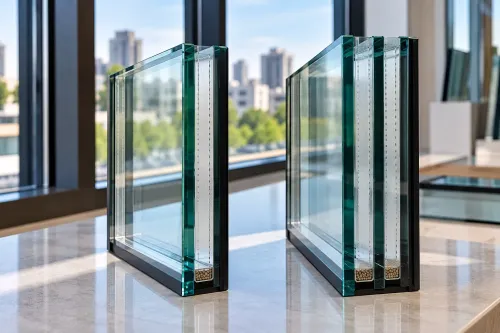
| Sealed insulating-glass unit | Two panes, cavity, spacer and edge seals | Insulation and some acoustic improvement when correctly specified |
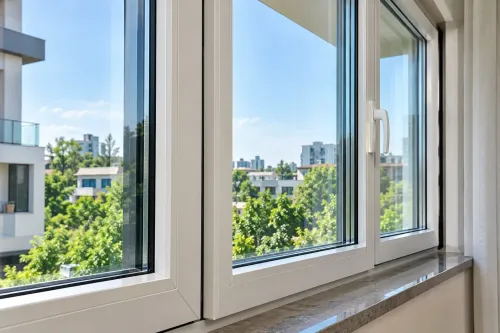
| Complete installed window | Frame, glass, gaskets, blocks, drainage and installation | Actual assembly performance; a frame claim cannot establish it |
For a toughened glass upvc window, state the complete build-up separately: pane thicknesses, finished dimensions, cavity width, air or argon fill, spacer type, sealants, coating, coating position and visible-light or solar-performance targets. A failed edge seal lets moisture into the cavity, creates internal condensation and reduces thermal performance.
For an upvc window in chhattisgarh or Odisha, control solar gain through orientation, external shading and solar-control or low-emissivity coatings; increasing thickness alone will not stop overheating. Confirm coating compatibility with tempering and sealing before fabrication. Select thickness from pane dimensions, support and site pressure under IS 875 (Part 3), not from the profile name.
The installer must also preserve the selected system’s clearances and drainage paths.
Choose retention and safety performance for the actual hazard
A toughened window glass pane normally breaks into relatively small, blunt-edged particles, not large knife-like shards. It is not unbreakable, however, and it does not stay bonded as one sheet after failure. A toughened glass UPVC window therefore reduces laceration risk but does not automatically provide fall protection, security or post-breakage retention.
| Construction | After breakage | Choose it when |
|---|---|---|
| Monolithic toughened glass | Granulates, but leaves the opening unretained | Basic safety glazing where people will not fall through the opening |
| Laminated glass | Fragments remain attached to an interlayer | Broken glass must remain in the frame, or you need fall protection, forced-entry resistance or stronger noise control |
| Toughened-laminated glass | Heat-treated plies break safely while the interlayer retains the assembly | Use for overhead glazing, low-level guarding, windows beside drops and security-sensitive openings |
Select laminated or toughened-laminated construction for a low sill beside a stair or balcony, an overhead pane, or any opening where falling glass creates a second hazard. A laminated build-up also gives you more retention after impact than monolithic toughened glass.
Use IS 2553 (Part 1):2018, Safety Glass—Specification, Part 1: Architectural, Building and General Uses, as the reference. Request conformity records and test evidence; do not accept “toughened” as proof. Where spontaneous breakage would have serious consequences, specify heat-soak testing for nickel-sulfide inclusion risk.
It reduces, but does not eliminate, that risk and adds cost and breakage yield.
Check the regional specification before placing the order
Approve the regional specification before ordering toughened glass for upvc window projects odisha in chhattisgarh. The visible label “toughened window glass” does not prove that the complete window will perform correctly.
1. Sign off the approved shop drawings, showing the finished pane width, height, tolerances, thickness, edge finish, corner details, holes and cut-outs.
2. Select thickness from calculated wind pressure, pane dimensions, building geometry and support conditions under IS 875 (Part 3), not from the UPVC profile name. An upvc window in chhattisgarh still needs checks for heat, solar exposure and local wind; there is no single state-wide glass rule.
3. Request heat-treatment identification and conformity records to IS 2553 (Part 1):2018. Ask whether all cutting, drilling, edging and notching occurred before toughening.
4. Record coating type and position, IGU pane arrangement, cavity, spacer and sealant data. Confirm that the IGU sealant, EPDM gasket and spacer suit the UPVC system.
5. Inspect installation: verify setting blocks at the specified locations, clear drainage paths, pressure equalisation, intact gaskets and no edge chips or direct contact with screws, metal or the frame.
6. For coastal Odisha, specify corrosion-resistant reinforcement, fasteners, brackets and hardware. Salt-laden air attacks these components even when the glass is correctly toughened.
Jivan Industries is useful when it supplies this fabrication and documentation trail. Ask what is guaranteed separately for the glass, IGU, frame and complete installed window.
Related product
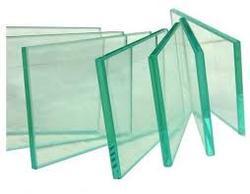 | SAFTEY Keeping full focus on the industry set quality standard, we are persistently offering an affordable spectrum of Toughened Glass to our clients in... View product → |
Frequently asked questions
How do you measure glass for a UPVC window?
Measure the recessed rebate that holds the pane, from rebate to rebate, rather than measuring the visible opening. Confirm the required deductions with the UPVC system supplier or fabricator.
Why must the glass fit the UPVC glazing system?
The pane must work with the system’s glazing bead, gasket, packers, drainage paths and available glass thickness. A pane that fits the opening can still fail to seat or seal correctly.
How do you choose a toughened glass build-up for a UPVC window?
Match the build-up to the project’s heat, noise and condensation goals. Consider whether a single pane, insulated glass unit or laminated safety construction addresses the actual requirement.
What should you check before ordering toughened glass for a UPVC project?
Check the approved UPVC profile, glass thickness, pane dimensions, edge-clearance requirements, retention method, safety performance and the project specification for work in Chhattisgarh or Odisha.